


Key Takeaways
- Moral injury occurs when a person participates in, witnesses, or fails to prevent an event that violates their core moral beliefs, and it's distinct from PTSD in both cause and treatment.
- Symptoms can include persistent guilt, shame, spiritual crisis, and social withdrawal, and they often surface months or years after the event.
- Healing from moral injury typically involves meaning-making, self-forgiveness work, and trauma-informed therapy rather than fear-based trauma treatment alone.
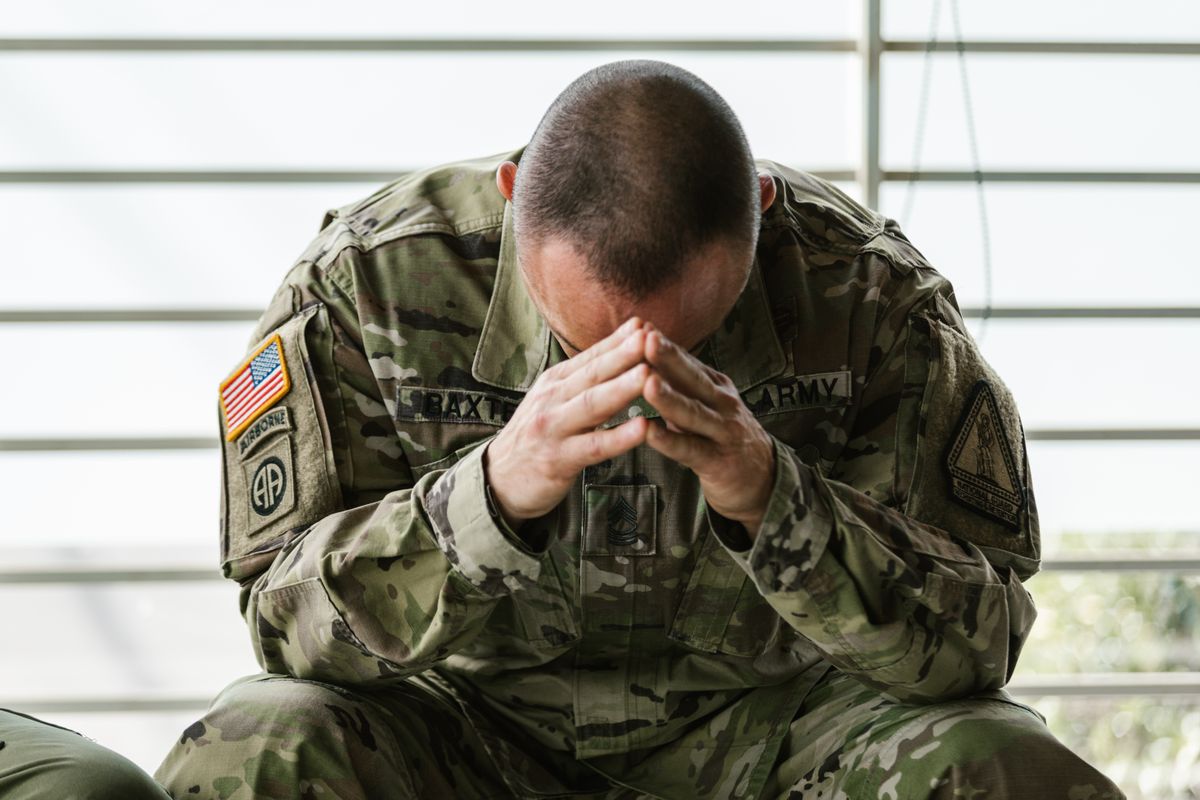
Military service requires people to operate in situations where there are no clean choices. Sometimes that means witnessing, participating in, or failing to prevent something that cuts against a deeply held moral code. When that experience doesn't fade, when it settles into persistent guilt, shame, or a fractured sense of self, it may be moral injury.
Moral injury is distinct from PTSD, though the two can co-occur. Where PTSD is rooted in fear and threat response, moral injury lives in the conscience. It's less about what the body remembers and more about what the mind can't reconcile. Understanding that distinction is often the first step toward finding the right kind of help.
What is Moral Injury in the Military?
Moral injury occurs when a person witnesses, perpetrates, or fails to prevent an act that fundamentally violates their moral beliefs, or when they feel betrayed by leaders or institutions they trusted to uphold shared values. The term was first developed in military contexts by psychiatrist Jonathan Shay and later expanded by researchers, including Brett Litz, whose work through the VA and Boston University has shaped how the condition is understood today.
In military service, moral injury can emerge from a wide range of experiences. A service member doesn't need to have directly acted to carry it; moral injury can develop in combat, non-combat, and institutional contexts alike.
“Moral injury is often associated with a deep internal and emotional wound or scar related to one's inability to live up to their own moral value, standard or expectation. It can be as simple as feeling like you "should have" helped, protect, defend or serve in a way that aligns with you personally. Oftentimes, it can feel like letting yourself down with regard to your own value system while bearing the challenge of processing guilt as a result."
- Talkspace Therapist, Elizabeth Keohan, LCSW-C
Moral injury vs. moral distress
Not every morally difficult experience leads to moral injury. It helps to understand the difference between short-term distress and lasting injury.
Moral distress is a normal response to difficult circumstances. Moral injury is what happens when that distress doesn't resolve and begins to erode a person's sense of who they are.
Common scenarios that violate values
Moral injury in military contexts can stem from a wide range of experiences, not only direct combat. Some of the most commonly reported situations include:
- Killing or injuring civilians, even when following orders or rules of engagement
- Witnessing the death of fellow service members and feeling responsible or unable to intervene
- Following orders that conflicted with personal ethics or a sense of justice
- Failing to report misconduct out of fear of retaliation or unit loyalty
- Providing care or support to operations that the service member believed were morally wrong
- Being denied the ability to provide aid to non-combatants due to mission constraints
These aren't abstract dilemmas. They're situations that leave a lasting mark precisely because the person involved had a moral framework strong enough to recognize the conflict.
Why time and context complicate moral perception
Wartime decisions are made under conditions rarely experienced in civilian life, including limited information, time pressure, physical exhaustion, and the demands of command authority. A choice that felt necessary in the moment can look entirely different in the safety and quiet of post-service life. This shift in perspective is one reason moral injury often surfaces or intensifies after separation from service, when the context that once justified certain actions no longer surrounds the person carrying them.
Betrayal by leadership and institutional failures
Moral injury doesn't only come from what service members themselves do. It also comes from what's done to them. Betrayal-based moral injury occurs when leaders, institutions, or systems act in ways that violate the trust and values of those serving under them. This can include cover-ups of misconduct, retaliation against those who report wrongdoing, failure to protect service members from harm, or bureaucratic indifference to the needs of veterans seeking care.
This form of moral injury can be particularly difficult to process because it combines personal betrayal with a loss of faith in the institutions that once defined a service member's sense of purpose.
What are the Symptoms and Warning Signs of Moral Injury?
Moral injury doesn't always announce itself clearly. Symptoms can emerge gradually and are often misattributed to depression, PTSD, or general stress. The following patterns are worth paying attention to.
- Persistent guilt and shame: A recurring sense that you did something unforgivable, or failed to do something you should have, even when others don't assign blame. This isn't situational guilt. It's a pervasive, identity-level self-condemnation.
- Spiritual or existential crisis: A loss of faith, whether religious or secular, in a just or meaningful world. Many service members describe feeling that their actions or experiences shattered a previously held belief that life has purpose or that good behavior is rewarded.
- Withdrawal and social disconnection: Pulling away from relationships, community, or activities that once provided meaning. This often stems from a belief in being fundamentally different from or unworthy of connection with others.
- Intrusive thoughts and rumination: Replaying specific events, particularly around decisions made or not made, with a focus on what should have been done differently. Unlike PTSD flashbacks, which are fear-driven, these tend to be judgment-driven.
- Anger and moral outrage: Intense, sometimes disproportionate reactions to perceived injustice, dishonesty, or hypocrisy, particularly in civilian contexts. This can strain relationships and workplace functioning.
Online therapy for military members
Find out if your insurance covers Talkspace and connect with an experienced, licensed therapist.
Get startedWhen symptoms surface later
Moral injury doesn't often peak during service. The structure, camaraderie, and mission focus of active duty can suppress its emergence. Symptoms often intensify during the transition to civilian life, when the psychological scaffolding of service is removed, and there's more time and space for reflection. It's not uncommon for moral injury to surface years or even decades after the events that caused it.
When to seek professional help
If these symptoms are affecting your relationships, your ability to function at work, your sense of self-worth, or your desire to stay alive, reach out for professional support. Moral injury is treatable, but it typically requires support and professional guidance.
Moral Injury vs. PTSD: How Are They Different
Moral injury and PTSD can look similar from the outside and often co-occur, but they have distinct origins, emotional cores, and treatment needs. Conflating the two can lead to interventions that address one while leaving the other unresolved.
Why do treatments diverge?
PTSD treatment typically focuses on fear extinction and processing traumatic memories through approaches like Prolonged Exposure and EMDR. These are effective for fear-based trauma but may not adequately address the guilt, shame, and meaning-loss at the center of moral injury.
Therapies like Adaptive Disclosure, developed specifically for military moral injury, and acceptance-based approaches that emphasize self-compassion and values clarification tend to be more appropriate. Applying fear-based PTSD treatment to moral injury without addressing the moral dimension can leave service members feeling unhealed or, worse, more ashamed for not responding to treatment.
Can you have both PTSD & moral injury?
Yes, and this is common. A service member who witnessed or participated in a traumatic event may carry both fear-based trauma responses and moral distress about the event simultaneously. In these cases, accurate assessment matters because treatment may need to address both dimensions in sequence or in parallel.
Working with a therapist who understands PTSD symptoms and treatment in military contexts, alongside the distinct features of moral injury, is important for meaningful recovery.
How can service members heal from moral injury?
Recovery from moral injury isn't linear, and it doesn't look the same for everyone. But research and clinical experience point to several consistent elements that support healing.
Spirituality and meaning-making
For many service members, moral injury creates a rupture in their worldview, a sense that the world is no longer just, that their actions cannot be integrated into a coherent story about who they are. Meaning-making, the process of finding a way to understand and contextualize difficult experiences without being destroyed by them, is central to recovery.
This doesn't require religious belief, though chaplains and spiritual care providers can play a meaningful role for those who are open to it. It can also happen through trauma-informed therapy, narrative work, or structured reflection on values and identity.
Self-forgiveness techniques
Self-forgiveness in the context of moral injury isn't about excusing actions or pretending harm didn't occur. It's about releasing the grip of self-condemnation enough to function and to move forward.
“Processing guilt can be such a heavy lift but it is not impossible. With professional support, working on identifying the many emotions and feelings associated is often the first step. It is not until that honest and open acknowledgement occurs, when the process of releasing and making amends can begin. Of course, I encourage considering some self forgiveness and self compassion along the way while expecting the process of time to lend some guidance."
- Talkspace Therapist, Elizabeth Keohan, LCSW-C
Practical approaches include:
- Writing a detailed account of the event from multiple perspectives, including that of the person you were at the time, operating under the constraints you faced
- Identifying the values that made the experience painful, as evidence that those values remain intact
- Practicing self-compassion exercises drawn from Acceptance and Commitment Therapy (ACT), which focus on observing difficult thoughts without fusing with them
- Seeking direct or symbolic repair where possible, whether through service, advocacy, or making amends in whatever form is accessible
Building a new sense of purpose
Many service members derived deep meaning from their role in the military. Moral injury can sever that connection to purpose, leaving a vacuum that isolation and rumination tend to fill.
Re-engaging with purpose doesn't mean returning to the same mission. It means finding new forms of contribution, connection, and meaning that align with who you are now. This might look like peer support work, community service, advocacy for veterans, mentorship, or creative expression. The goal is to rebuild a life narrative in which the difficult experiences of service are part of a larger, still-meaningful story.
How Talkspace Supports Military Service Members
Military service members face challenges that most people never will, and the mental health toll of military life is real. Finding the right support can be difficult, especially when schedules are unpredictable, and stigma still runs deep in many military communities.
That's where having flexible, confidential access to care makes a difference. Talkspace connects service members with therapists who understand military culture and the unique pressures that come with it. Support is available when you are ready for it. Explore online counseling and therapy for military members through Talkspace, covered by insurance.
Frequently Asked Questions (FAQs)
Is moral injury a recognized mental health diagnosis?
Moral injury is not currently listed as a standalone diagnosis in the DSM-5, but it is widely recognized in clinical and research communities as a distinct and serious mental health condition.
Can moral injury happen without combat experience?
Yes, moral injury can occur without combat experience. It can result from any situation where a person feels they have violated their moral or ethical values or witnessed others doing so, such as medical errors, first-responder experiences, or other high-stakes life events.
How can someone start healing from moral injury?
Healing from moral injury begins with acknowledging the experience and its emotional impact and seeking support from trusted mental health professionals, peers, or spiritual advisors. Evidence-based therapies, reflective practices, and connection with supportive communities can help individuals process guilt, shame, and ethical conflict and gradually restore a sense of moral integrity.
Can moral injury develop after leaving the military?
Yes, moral injury can develop after leaving the military. Experiences or memories of actions, decisions, or events during service may resurface in civilian life, causing guilt, shame, or ethical conflict even years later.
Is moral injury the same as PTSD?
No, moral injury is not the same as PTSD. While PTSD primarily involves fear-based symptoms like flashbacks, hypervigilance, and avoidance, moral injury centers on guilt, shame, and ethical or spiritual conflict arising from actions or events that violate a person’s moral beliefs.
Talkspace articles are written by experienced mental health-wellness contributors; they are grounded in scientific research and evidence-based practices. Articles are extensively reviewed by our team of clinical experts (therapists and psychiatrists of various specialties) to ensure content is accurate and on par with current industry standards.
Our goal at Talkspace is to provide the most up-to-date, valuable, and objective information on mental health-related topics in order to help readers make informed decisions.
Articles contain trusted third-party sources that are either directly linked to in the text or listed at the bottom to take readers directly to the source.