
The relationship between a therapist and a patient is critical to successful treatment outcomes; and not something that can (or should) easily be replicated with AI. Most clinicians agree on that. But millions of people are already turning to general-purpose AI to talk through stress, relationships, and deeply personal concerns, often with no clinician in the loop. In some cases, chatbots have reinforced harmful thinking in people who were already struggling.
These are legitimate concerns that we need to better understand so we can prevent them. And while, for some, it can be tempting to argue that no one should be using AI for mental health support at all, the fact that so many people are indicates that our current system is not meeting people’s needs. As mental health professionals, can help define where these tools are useful, where they aren’t, and how they can lead people toward professional care rather than away from it.
As a clinical psychologist and Talkspace’s VP of Clinical Operations and Quality, I see a role for AI in making mental health support more accessible, particularly for people who may be hesitant to seek therapy. I think it can also be a useful tool for folks engaged in therapy to expedite progress and stay committed to therapeutic goals, which we know is not easy to do.
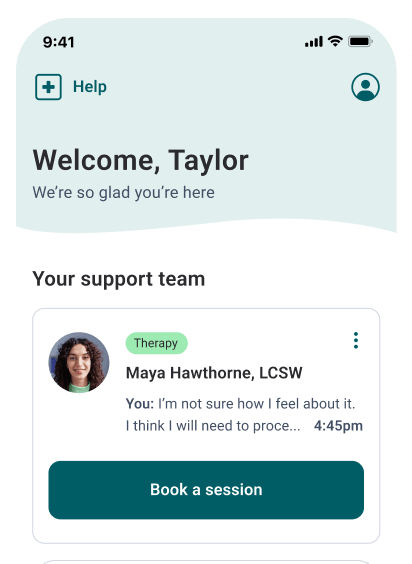
This is the intended role of Tee, Talkspace’s AI guide for adults navigating everyday emotional challenges. It is designed to help people reflect on their thoughts and feelings, practice coping skills, and find a pathway to professional care when appropriate. It does not diagnose psychiatric conditions, prescribe treatment, or present itself as a licensed clinician.
Therapy is, by definition, between two people. We should never ask someone to mistake a generated response for another person’s emotional presence.
Still, a tool can have value without reproducing everything that happens in a therapist’s office. Someone sorting through a stressful workday may want help identifying what is upsetting them. A person preparing for a difficult conversation may benefit from examining their assumptions. Someone already in therapy may want to practice a skill between appointments. These are narrower uses than psychotherapy, but they deserve consideration on their own terms.
Talkspace’s network of 6,000 therapists provides care virtually, so we know firsthand how much the human relationship matters. That experience shaped how we built Tee. In the years before its June launch, we deliberated over which use cases are appropriate, what protections should be required, and how the tool could recognize when an interaction should stop and a person needs human care.
Those questions led us to build in healthcare privacy protections, risk-detection systems, and oversight by licensed clinicians. Risk-detection algorithms run in the background of Tee, and when they flag a potential clinical concern, they alert the therapists who monitor the platform seven days a week. Those clinicians can review the conversation and decide whether additional support is needed. So far, out of all of the risks Tee has flagged, approximately 10% have been referred to therapy or additional crisis resources.
These safeguards do not make AI infallible, but they establish a process for bringing human judgment into situations where automated responses are insufficient.
The question is no longer whether people will bring their emotional lives to AI. They already do. What’s still open is whether the tools they find will know their limits, protect their privacy, and recognize when human intervention is needed. Mental health professionals have a responsibility to help answer these questions, including being honest about the risks, while continuing to advocate for affordable human care.
There continue to be many challenges in our mental healthcare system that AI alone won’t fix (stigma, therapist reimbursement rates, cost, gaps in insurance). But it can offer an entryway into the mental healthcare system when needed, if it is designed appropriately and with extensive clinical involvement. If Tee helps a person put words to what they’re feeling and then, when it matters, connects them with a therapist, it will have done its job. A chatbot can’t be the bond at the heart of therapy, but it can help more people find their way to one.