

What is Misophonia?
Misophonia, from the Greek meaning "hatred of sound," is a condition in which specific sounds elicit intense, disproportionate emotional and physiological reactions. The term was first introduced by audiologists Pawel and Margaret Jastreboff in 2001 to describe a pattern they observed in patients who experienced extreme distress in response to particular sounds.
The reaction is not simply annoyance. People with misophonia describe an almost involuntary surge of rage, panic, disgust, or the urgent need to escape, activated within milliseconds of hearing an activating sound. The response is immediate, difficult to override, and frequently accompanied by physical sensations including muscle tension, increased heart rate, and sweating.
According to the Southwestern Hearing & Balance Institute, misophonia is distinct from hyperacusis, which involves generalized sensitivity to sound volume, and from phonophobia, which involves fear of sounds. In misophonia, the reaction is specific to particular sounds and is emotionally rather than acoustically driven.
Misophonia is not currently listed as a standalone diagnosis in the DSM-5, though it is increasingly recognized in clinical and research communities as a distinct condition. A landmark study published in the Current Biology journal found that individuals with misophonia show abnormal functional connectivity between the auditory cortex and areas involved in emotional processing, including the anterior insular cortex, providing neurological evidence for the condition's legitimacy and mechanism.
“Some patients with misophonia have described the emotional impact of activator sounds as dysregulating their baseline emotional state. They describe sudden mood changes when eating dinner with others or even the sound of someone chewing gum as unnerving.”
- Talkspace Therapist, Dr. Karmen Smith, LCSW, DD
How Do You Identify Misophonia Activators?
Misophonia activators are the specific sounds or, in some cases, visual stimuli that provoke the misophonic response. Understanding a person's individual activator profile is central to both diagnosis and treatment planning.
Common sound-based activators include:
- Oral sounds: chewing, swallowing, lip-smacking, slurping, crunching
- Nasal sounds: sniffing, breathing, snoring, throat-clearing
- Repetitive sounds: pen clicking, keyboard typing, finger tapping, foot shuffling
- Vocal sounds: certain speech patterns, consonant sounds, whispering
Visual activators, sometimes called misokinesia, can occur alongside or independently of sound activators. These include watching someone chew, fidget, or make repetitive movements. According to research published in Scientific Reports, misokinesia affects approximately one-third of the general population to varying degrees and is particularly prevalent in people who also experience misophonia.
A defining feature of misophonia activators is their specificity and relational context. The same sound made by a stranger in a public setting may provoke a milder response than the same sound made by a close family member; a pattern that researchers believe reflects the heightened attentional vigilance people with misophonia develop in intimate environments where escape is less socially acceptable.
Activators can and do change over time. New sounds may become activating, particularly during periods of high stress, and some activators that were once highly distressing may reduce in intensity with treatment.
What Causes Misophonia?
Misophonia causes are not yet fully established, and the condition remains an active area of research. Current evidence points to a combination of neurological, psychological, and conditioned learning factors rather than a single identifiable cause.
- Neurological factors: These are among the most compelling areas of current research. The study by the Current Biology journal identified abnormal myelination, the insulating sheath around nerve fibers, in the anterior insular cortex of people with misophonia, alongside atypical connectivity between auditory processing areas and the regions governing emotional and physiological response. This suggests that in misophonia, the brain routes specific sounds through emotional threat-response circuitry in a way that differs fundamentally from typical auditory processing.
- Classical conditioning: This is thought to play a role in how misophonia develops and expands. An initial aversive experience with a particular sound, such as eating at a tense family dinner, for instance, may condition a strong emotional response that then generalizes to related sounds or contexts over time.
- Genetic factors: These have been proposed based on the observation that misophonia frequently runs in families, though no specific genetic marker has been identified. As per the Medicina journal, misophonia appears to share heritable components with related conditions, including OCD and anxiety disorders.
The condition typically emerges in late childhood or early adolescence, commonly between ages 9 and 13, often beginning with a single activator sound in a family context and expanding in scope over subsequent years.
How is Misophonia Diagnosed?
Misophonia doesn't currently have a standalone DSM-5 diagnosis, which means there is no universally standardized diagnostic pathway. This often leads to significant diagnostic delays, as many individuals encounter clinicians who are unfamiliar with the condition or who attribute symptoms to anxiety, sensory processing issues, or behavioral problems. Diagnosis is typically clinical, based on a detailed account of symptom history, activator profile, and functional impact.
The following tools and processes are used in clinical settings:
- Amsterdam Misophonia Scale (A-MISO-S): A structured rating scale assessing the severity of misophonic responses, time occupied by activator awareness, and functional interference, adapted from the Yale-Brown Obsessive Compulsive Scale
- Misophonia Questionnaire (MQ): Several questionnaires, such as the Duke Misophonia Questionnaire, are available that measure the type and severity of misophonic sounds and emotional responses, useful for both initial assessment and treatment monitoring
- Clinical interview: A thorough psychiatric and audiological history to differentiate misophonia from hyperacusis, phonophobia, sensory processing disorder, and OCD-related presentations
- Functional impact assessment: Evaluating how symptoms affect relationships, work, educational settings, and daily routines
An accurate diagnosis requires ruling out conditions that can produce overlapping symptoma, which is why clinicians experienced in both auditory conditions and anxiety-spectrum disorders are best positioned to assess misophonia comprehensively.
What Conditions Often Occur Alongside Misophonia?
Misophonia rarely presents in isolation. Understanding the conditions most commonly associated with it is important for accurate diagnosis and building a treatment plan that addresses the full picture.
- OCD and OCD-spectrum conditions: The intrusive, unwanted nature of misophonic responses and the difficulty suppressing attention to activators share structural similarities with OCD. Research published in Medicina found elevated OCD symptoms in individuals with misophonia, and some researchers have proposed misophonia as an OCD-spectrum condition.
- Anxiety disorders: Generalized anxiety disorder and social anxiety disorder commonly co-occur with misophonia. Heightened baseline anxiety lowers the threshold for misophonic responses and makes activator management more difficult.
- ADHD: ADHD-related overstimulation and sensory sensitivity overlap meaningfully with misophonia. People with ADHD often have difficulty filtering irrelevant sensory input, which can amplify misophonic responses and make avoidance behaviors harder to manage.
- PTSD: Hypervigilance and heightened threat-detection in PTSD can intensify misophonic reactivity, particularly when activator sounds are associated with prior traumatic contexts.
- Depression: Chronic misophonia frequently contributes to social withdrawal, relationship strain, and reduced quality of life, all of which are risk factors for the development or worsening of depressive symptoms.
- Autism spectrum conditions: Sensory sensitivities associated with autism can overlap with misophonia, though the two are distinct in mechanism and presentation. Clinicians should assess both independently rather than attributing sound sensitivity in autistic individuals solely to their diagnosis.
Evidence-Based Treatment and Management Options for Misophonia
There is currently no single treatment that eliminates misophonia, and no medication is approved specifically for the condition. However, several therapeutic approaches have demonstrated meaningful benefit in reducing symptom severity, improving emotional regulation, and expanding the range of environments a person can tolerate.
“The most helpful therapeutic approach and in supporting individuals with misophonia is to acknowledge that they are not crazy or losing their mind. This is a key component to treatment because for so long the person doesn’t understand what is happening to them and don’t understand why others are not feeling the same way. The education part of treatment helps people understand this a neurological condition that that does not have to be debilitating.”
- Talkspace Therapist, Dr. Karmen Smith, LCSW, DD
- Cognitive Behavioral Therapy (CBT): This is the most widely used psychological intervention for misophonia. Types of CBT used in misophonia treatment include standard CBT targeting the catastrophic appraisals and avoidance behaviors that maintain the condition, as well as acceptance-based approaches that reduce the struggle against activator awareness rather than attempting to eliminate it. A pilot study published in the Cognitive Behaviour Therapist found that CBT delivered over 12 sessions produced significant reductions in misophonia severity and associated distress.
- Sound therapy and tinnitus retraining therapy (TRT): Adapted for misophonia, it uses low-level background sound to reduce the contrast between silence and activator sounds, gradually reducing the salience of activators. The Misophonia Institute identifies TRT-based protocols as among the most established audiological approaches to misophonia management.
- Dialectical Behavior Therapy (DBT) skills: Distress tolerance and emotional regulation techniques are frequently incorporated into misophonia treatment to address the intensity of the emotional response when avoidance isn't possible.
- Exposure and response prevention (ERP): Adapted carefully for misophonia, this therapy involves gradual, structured exposure to lower-intensity versions of activator sounds to build tolerance over time. This approach requires a clinician experienced in both ERP and misophonia, as poorly structured exposure can worsen rather than improve the condition.
- Practical environmental management strategies: These include the use of earplugs, white noise machines, and headphones in activating settings, which are not treatments in themselves but are important components of a broader management plan that reduces daily distress while therapeutic work progresses.
Living with Misophonia: Building Understanding and Support
Living with misophonia involves navigating a condition that remains widely misunderstood by the public, many clinicians, and often by the families and partners of people who experience it. Responses that dismiss misophonia as oversensitivity or rudeness are common and add on to the isolation many people already feel.
Building a sustainable life with misophonia requires honesty about needs, practical environmental adaptations, and relationships in which the condition is treated with the same seriousness as any other health condition. Open communication with family members and partners, explaining the neurological basis of the response and distinguishing it from personal rejection of them, is one of the most impactful steps a person with misophonia can take.
Peer support communities, including those coordinated by the Misophonia Association, offer connection with others who share the experience, reducing the shame and isolation that frequently accompany the condition. Online communities can be particularly accessible for people whose symptoms make certain shared environments difficult to navigate.
For family members and partners, psychoeducation, learning what misophonia is, how activators work, and what responses help versus harm, is the foundation of effective support. Attempting to force exposure, minimizing the severity of reactions, or taking avoidance behavior personally are responses that worsen the impact of the condition.
Get Misophonia Support with Talkspace
Misophonia is a real, neurologically grounded condition, and it is manageable with the right clinical support. The most significant barrier for most people with misophonia is not the absence of effective treatment but the difficulty in finding a clinician who understands the condition well enough to deliver it. Misidentification as anxiety, OCD, or simply a "bad attitude" toward noise delays appropriate care and worsens distress.
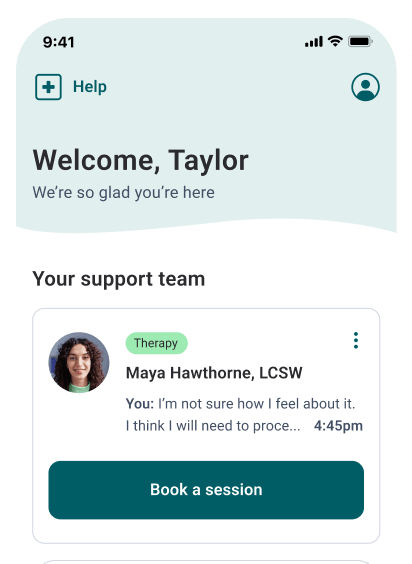
Talkspace connects you with licensed therapists and psychiatric providers through a secure, HIPAA-compliant platform, accessible without waitlists, commutes, or the sensory challenges of clinical waiting rooms. Whether you're seeking a first evaluation, CBT-based therapy for misophonia management, or support for co-occurring anxiety or depression, explore therapy and online psychiatric support through Talkspace today.
Frequently Asked Questions (FAQs)
How do misophonia symptoms affect daily life?
Misophonia symptoms can make everyday sounds cause intense emotional or physical reactions, disrupting focus, work, and social interactions. Over time, people may start avoiding certain places, situations, or even relationships to reduce exposure to bothersome sounds.
Can misophonia activators change over time?
Yes. New activators can develop, particularly during periods of elevated stress. Some activators may reduce in intensity with treatment, while others persist. Tracking activator changes over time helps clinicians adjust treatment approaches accordingly.
What causes misophonia reactions to specific sounds?
Misophonia reactions are thought to result from an unusual connection between the auditory system and the brain’s emotional centers, causing certain sounds to provoke strong negative responses. Genetics, past experiences, and heightened sensitivity to sensory input may all contribute to why specific sounds elicit these intense reactions.
How is misophonia different from sound sensitivity?
Misophonia is a selective emotional reaction to specific sounds, often causing anger, irritation, or anxiety, whereas general sound sensitivity (hyperacusis) is a heightened discomfort or pain in response to a wide range of sounds. In other words, misophonia involves emotional responses to particular activators, while sound sensitivity is more physical and broad-based.
What coping strategies help people manage misophonia?
People with misophonia can manage symptoms through sound management, behavioral techniques, and environmental adjustments. Strategies include using noise-canceling headphones or earplugs, practicing relaxation or mindfulness exercises, setting boundaries in situations that cause discomfort, and working with therapists on cognitive-behavioral approaches to reduce emotional reactivity.
Is misophonia a recognized medical condition?
Misophonia isn't currently recognized as a standalone medical or psychiatric disorder in the DSM-5, so it doesn't have a formal diagnostic classification. However, it is increasingly studied and acknowledged by researchers and clinicians as a distinct condition that can significantly affect quality of life.
Can children develop misophonia?
Yes. Misophonia most commonly begins between ages 9 and 13, often starting with a single activator in a family mealtime context. Early identification and intervention are important, as the activator profile tends to expand without appropriate support.
Does misophonia ever go away on its own?
Misophonia rarely resolves without intervention and tends to broaden in scope over time. With consistent evidence-based treatment, particularly CBT and sound therapy, most people experience meaningful improvement in symptom severity and quality of life, though complete elimination of responses is uncommon.