


Seek Professional Help
According to research, as many as 1 in 10 adults in the United States struggle with depressive symptoms. Learning to cope with depression symptoms is possible, but that doesn’t mean it’s easy to do on your own. The most critical step you’ll take is often the first one when you ask for help.
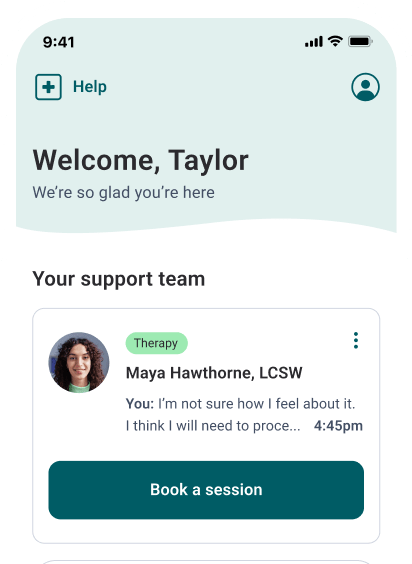
Working with an experienced therapist ensures you have the professional support and guidance you need to manage depressive episodes. You can further enhance therapy outcomes by combining it with other techniques — like the ones discussed below. Talkspace makes access to mental health support easy and convenient, with online therapy uniquely tailored to your needs and schedule. Taking this initial step to seek help will allow you to start building a foundation of tools and strategies so you can overcome your depression safely and productively.
"There are several types of therapy that are effective for dealing with depression and negative thoughts. For example, cognitive behavioral therapy and mindfulness-based cognitive therapy can help individuals modify negative thoughts to more positive ones."
— Olga Molina, D.S.W., LCSW
Recognize & Reframe Negative Thoughts
Depression causes negative or irrational thoughts that can distort your perception of reality. Learning how to think positively when depressed will let you reframe these negative thought patterns in an effective way to reduce symptoms, and it’s something you can work on in therapy.
Cognitive behavioral therapy (CBT) is a type of talk therapy that’s used to help identify — and then change — unhealthy or unhelpful thought patterns that might be contributing to your depression. Once you recognize negative thought patterns, you can take proactive steps to alter them so you have a more positive outlook.
"Cognitive behavioral therapy helps individuals recognize the relationship between behavior, thoughts, and feelings so that they can function at their best."
— Olga Molina, D.S.W., LCSW
Combat Negatives with a Positive
Train your mind to get in the habit of countering negative thoughts with positive ones. Often used in positive psychology, the technique focuses on using positive thoughts for depression to gradually reduce the impact negative thinking has on your life and relationships. For example, the next time you think something like I can’t do anything right, try breaking the pattern by listing all your past successes.
Recite Positive Affirmations
Affirmations are short, powerful, positive statements that can help rewrite subconscious negative scripting. Repeating affirmations like I am worthy of good things, or I am enough helps boost self-esteem and can reduce the psychological distress linked to depression. Research shows that people who regularly recite affirmations can significantly reduce cortisol levels related to high stress.
Online therapy for depression
You don't have to deal with depression alone. Get an appointment from home within a few days.
Get startedPractice Gratitude
Being grateful can be a highly effective positive psychological intervention. Multiple studies have found that gratitude lists improve perceived stress and depression. Gratitude shifts focus from what you don’t have in your life to what’s right in front of you. Small and accessible practices like writing in a gratitude journal can significantly improve psychological health.
Surround Yourself with Positive Influences
They say you are the company you keep, and it’s true that the people around you can significantly impact your mood and outlook on life. In short, you’ll be better off if you surround yourself with positive, supportive people who lift you up and offer encouragement. On the same note, it might be a good idea to assess the people in your life and distance yourself from unhealthy influences who continuously provide a negative outlook on things.
Limit Negative Media Consumption
Constant exposure to the 24-hour news cycle or social media content can worsen feelings of isolation and depression. The use of social media has been linked to increased anxiety and depression. Limiting how much time you spend on your favorite social platforms and being more aware of how much media you consume daily can help you manage depression.
Embrace Self-Compassion
Research links self-compassion and high self-esteem to enhanced emotional intelligence, increased wisdom, and reduced depression. When you’re depressed, negative self-talk tends to be more prevalent, damaging to your psyche and exacerbating symptoms. Practicing self-compassion means treating yourself with kindness, respect, and understanding. Think about how you’d respond to a friend and try to change your internal dialogue to be similar.
Practice Healthy Coping Skills
Learning healthy coping skills for depression, like mindfulness, deep breathing, yoga, and meditation, can provide a positive outlet that helps you process and manage your emotions. Coping mechanisms like these are a way to occupy your mind and reduce symptoms of depression.
Boost Mood Through Movement
We already know that physical activity can be a powerful way to improve physical health, but it’s also a mood booster. Exercise releases endorphins and dopamine, neurotransmitters in the brain linked to mood, so it can effectively reduce feelings of depression. Even moderate exercise, like taking a walk, can offer significant mental health benefits.
Celebrate Progress
Having the courage to deal with your depression should be celebrated. Recognize every bit of progress you make, regardless of how small you may think it is. Every step you take toward creating a positive mindset is a victory as you work to beat your depression. Honoring these moments can reinforce the positive behaviors you’re adopting so you stay motivated to keep going in the future.
Embracing a Brighter Outlook with Professional Support
Knowing how to think positively when you’re depressed and adopting a positive attitude is an effective way to manage depression. Consistently using the tips you’ve learned here might be easier if you have additional support and encouragement through therapy, support groups, or mental health hotlines.
Seeking professional help when managing depression isn’t a one-time deal — it’s a continuous effort on your journey toward mental well-being. Talkspace makes it simple, providing accessible and affordable therapy for depression so you can start finding the positives in life.
Reach out to Talkspace today to learn more about online treatment for depression.