Quick Summary
- Military couples face unique challenges, such as long deployments, frequent moves, communication barriers, and the emotional strain of separation.
- Strong communication, a reliable support network, and shared rituals can help couples stay connected during distance and change.
- Mental health struggles such as anxiety, depression, and PTSD can affect both partners, making professional counseling or therapy an important resource.
- With resilience, flexibility, and support, military relationships can not only survive but grow stronger over time.
Military life can be demanding on relationships. Most military relationships have dealt with things that civilian couples don’t have to face, like late-night goodbyes, spending months apart, frequent moves, and learning to reconnect when they come back together. Your strength and flexibility are admirable and essential.
Military relationships often need additional support so couples can navigate the emotional, physical, and logistical challenges that feel so isolating. If you’re looking for help, keep reading for validation, tips on how to feel less alone, and strategies to help your relationship stay strong and connected.
What Makes Military Relationships Hard?
The simple truth is that no matter how much you love your partner, navigating the military and relationships can be challenging. It doesn’t mean that you’re doing anything wrong or that your relationship is weak. The hurdles you face—from long-distance relationships in the military to frequent relocations—are common, and many couples struggle like you are.
Online therapy for military members
Find out if your insurance covers Talkspace and connect with an experienced, licensed therapist.
Coping with deployment and separation
Deployment can be tough on couples. It’s the loneliness at the dinner table, the constant checking of your phone, hoping for a call or message, and the stress of being apart for long periods. Research shows that a partner’s deployment can disrupt stability and threaten relationship quality. However, it also shows that effective communication, support from social networks, and other maintenance strategies can help your relationship survive.
Communication barriers
Technology today makes communication much easier for military families. Texts, emails, voice memos, and video chats (when there’s a good Wi-Fi connection) can all help you feel more connected to your partner. Even with these tools, though, communication, especially during deployment, can be unpredictable and wildly inconsistent. Messages might feel rushed, or you might not talk for days or weeks at a time, often with no warning or explanation.
”Deployment can cause a strain on the emotional connection and mutual trust in couples. Physical distance and limited communication can cause feelings of loneliness or disconnection. The lack of daily contact and the stress each partner experiences separately can cause a further divide in the relationship. If couples prioritize honest communication and make sure to have emotional check-ins with each other, they can often work on strengthening their connection despite the distance.”
– Talkspace therapist Bisma Anwar, LPC, LMHC
Managing uncertainty and frequent relocations
Frequent moves are common when you live a military life. They can take an emotional toll on your psyche and your relationship. Each new duty assignment means new jobs, new schools for the kids, and adjusting to a new community. You’re often starting over again and again, and as exciting as it can be, it also disrupts friendships, relationships, and your ability to feel settled.
Navigating mental health and emotional stress
Military couples have a higher risk for mental health concerns. The psychological effects of military service can extend to both you and your partner.
For service members, it can be depression, military stress, or post-traumatic stress disorder (PTSD). For their spouses or partners, research suggests increased rates of depression and anxiety are common. The feelings you’re having aren’t a sign that you’re weak. They’re an understandable reaction to the stress and circumstances of your relationship.
“Couples in military relationships face mental health challenges such as anxiety, depression, and PTSD, especially following deployments or combat exposure. These conditions can also lead to more serious issues such as emotional withdrawal, irritability, or communication breakdowns. These things can make it difficult for partners to feel secure or understood. The resulting stress can strain intimacy and trust in the relationship. It is possible that with support and treatment, couples can learn to navigate these challenges together.”
– Talkspace therapist Bisma Anwar, LPC, LMHC
Parenting through deployment
Being a parent can be stressful in any circumstance. Being a parent in a military family can feel even more overwhelming. If you’ve ever seen your child struggle to understand why their parent is gone, or you’ve been parenting on your own for any length of time, you know how difficult it is to juggle comfort and discipline on your own.
Studies show that children of deployed service members often have increased anxiety and behavior problems. They’re also more likely to have trouble sleeping and be more clingy than usual. Even when your spouse comes home, it can take some time to rebuild your routines and reestablish a family unit system. Consider doing research on how to prepare your children for deployment prior to the transition to make it as easy on your family as possible.
Reintegrating after time apart
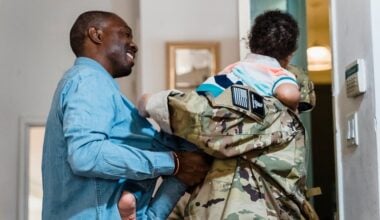
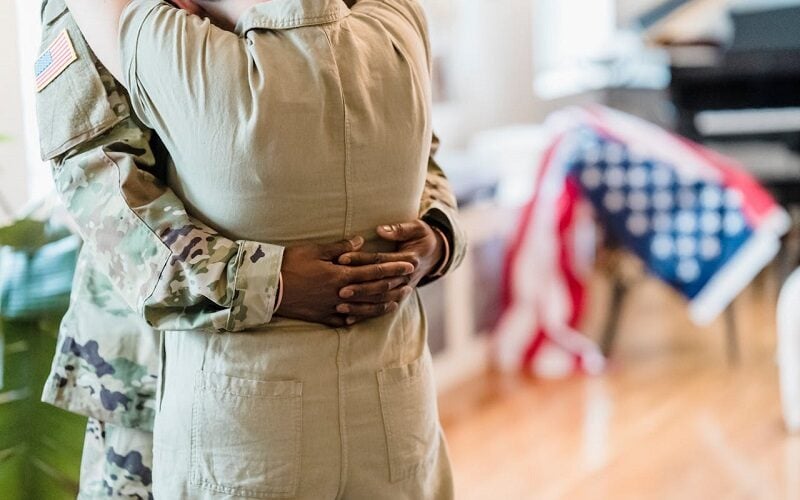
Anticipating your partner’s return is thrilling. You might also feel a little anxious, awkward, or tense, though, especially if they’ve been gone for an extended period. Maybe you’ve both changed since you were last together. You probably settled into a routine and are more self-sufficient and used to doing things “your way.” It’s normal to need some time to adjust and get to know each other again.
Can Military Relationships Work?
There is no doubt that the military and relationships can work. While they might require more resilience and flexibility than a civilian marriage or relationship, the qualities you develop as a result can actually strengthen your family bond.
According to extensive research, military couples who learn to adapt and find ways to stay connected can develop a deeper appreciation for one another. Some even say their partnership is stronger because of the hurdles they’ve overcome together.
Effective strategies that can help military couples include:
- Learning and using strong communication skills
- Having a strong support network
- Creating meaningful habits
- Sharing goals and working toward them, even when you’re apart
- Being willing to seek counseling or support when needed
Strategies for Staying Strong Together
Even if you’re confident that your relationship can handle the difficult aspects of military life, you don’t have to do this on your own. The following proven strategies will help strengthen your relationship over time.
Prioritize communication (even when it’s hard)
You don’t need daily, deep conversations to feel connected to your partner. Even small routines, like sending a goodnight text or listening to the same song at the same time across time zones, can create a sense of connection.
Try creating a communication plan ahead of deployments or long separations. This helps both partners manage expectations and can reduce anxiety. Your plan can clarify how often and in what ways you’ll be in contact with each other. Share what information is helpful vs. overwhelming. Do you want to know everything? Or are you both the types who’d rather protect each other from added stress?
”When couples are separated by deployment or training, it is important to have consistent and intentional communication. It helps to set realistic expectations about when and how often you’ll connect with each other. This helps reduce anxiety and misunderstandings. Sharing small, everyday details can improve and maintain emotional closeness. Expressing appreciation and reassurance for the other person can create a stronger connection.”
– Talkspace therapist Bisma Anwar, LPC, LMHC
Remember that it’s not uncommon for communication to feel tense or get off schedule. It’s not a sign of your relationship breaking down. Be open and honest about how you’re feeling during separations.
Build a strong support network
Having a strong support system is one of the most crucial parts of military life. Feeling cut off or distant from familiar faces and support can be devastating. Especially if you’ve recently relocated, take the time to seek out local groups, online communities, or organizations that cater to navigating life as a military spouse or partner. Having even one or two “military friends” who understand what you’re going through can take some of the weight off your shoulders.
Organizations like Military OneSource or Blue Star Families connect you with others who understand your experience.
Create shared rituals or goals
Establishing daily or even weekly rituals can help you stay connected to your spouse during a separation. Couples who share meaningful interactions and communicate during deployment report significantly higher relationship satisfaction rates post-deployment.
You might write letters, plan virtual dates, or even just set aside a specific time every week to catch up and share funny stories, fears, or hopes for the future.
Seek counseling or support when needed
Most couples can benefit from working with a mental health professional, chaplain, or other religious figure, or a support group. Counseling, either individual or together, can help you and your partner make sense of the stress you’re feeling due to your partner’s commitment to the military.
Therapy helps you develop strong communication skills and learn effective coping skills you can rely on during the difficult days. TRICARE ensures military service members and their families have access to mental health services, including convenient virtual therapy, often with no or low co-pays.
Navigating Challenges with Support
From Army families to Navy families and every branch of service in between, it’s no secret that military couples face unique stressors that are more challenging than what civilian couples deal with. You don’t have to face these challenges alone. Reach out for support from friends, professionals, or organizations designed for military families if you need strength and hope.
If you’re feeling overwhelmed, having a hard time coping with a spouse on deployment, or just need someone to talk to, therapy is a very accessible and powerful resource. Talkspace therapists offer support when your marriage needs it most, and it’s even covered by TRICARE.
You can get confidential, judgment-free support right from the comfort of your own home or wherever you are. Military relationships might be tested more than other relationships, but with care and support, yours can thrive. Discover more about online therapy that takes TRICARE with Talkspace today.
Sources:
- Knobloch LK, Monk JK, Wadsworth SMM. Relationship maintenance among military couples. Journal of Social and Personal Relationships. 2022;40(3):734-772. doi:10.1177/02654075221105025. https://pmc.ncbi.nlm.nih.gov/articles/PMC10191153/. Accessed July 28, 2025.
- Ohlsson A, Nilsson S, Larsson G. Social and Psychological Support for Military Personnel and Their Families in Connection with Military Deployment: A Scoping Review and Thematic Analysis. Journal of Veterans Studies. 2024;10(1):160-172. doi:10.21061/jvs.v10i1.533. https://journal-veterans-studies.org/articles/10.21061/jvs.v10i1.533. Accessed July 28, 2025.
- Williamson V, Stevelink S a. M, Da Silva E, Fear NT. A systematic review of wellbeing in children: a comparison of military and civilian families. Child and Adolescent Psychiatry and Mental Health. 2018;12(1). doi:10.1186/s13034-018-0252-1. https://capmh.biomedcentral.com/articles/10.1186/s13034-018-0252-1. Accessed July 28, 2025.
- Madsen O. Military Basics 101. Military OneSource. Published July 23, 2025. https://www.militaryonesource.mil/military-basics/new-to-the-military/military-basics-101/. Accessed July 28, 2025.
- Welcome to Blue Star Families. Blue Star Families. https://bluestarfam.org/. Accessed July 28, 2025.
- Meadows SO, Tanielian T, Karney B, et al. The Deployment Life Study: Longitudinal analysis of military families across the deployment cycle. Published January 13, 2017. https://pmc.ncbi.nlm.nih.gov/articles/PMC5568161/. Accessed July 28, 2025.
- What TRICARE covers. TRICARE. https://tricare.mil/. Accessed July 28, 2025.
Talkspace articles are written by experienced mental health-wellness contributors; they are grounded in scientific research and evidence-based practices. Articles are extensively reviewed by our team of clinical experts (therapists and psychiatrists of various specialties) to ensure content is accurate and on par with current industry standards.
Our goal at Talkspace is to provide the most up-to-date, valuable, and objective information on mental health-related topics in order to help readers make informed decisions.
Articles contain trusted third-party sources that are either directly linked to in the text or listed at the bottom to take readers directly to the source.