

Creating a Safe Space to Discuss Anxiety
Whether you ask or deduce it after months of dating, there will be a point when your partner discloses they deal with anxiety. It’s a crucial moment in the relationship, so be sensitive, have empathy and do not judge. Thank them for trusting you with this information that they have most likely have not shared with many people. See it as the beginning of a discussion you can resurface occasionally.
Educating Yourself About Anxiety
Learning some basic facts about anxiety will help you better understand and support your loved one. Talkspace therapists Kate Rosenblatt, MA, LPC, LMHC and Bisma Anwar, LCSW among other mental health professionals, recommended you keep these ones in mind.
- Anxiety is a real problem, not something made up. It is a mental health issue.
- Anxiety is normal. Everyone has it. It only becomes an issue or disorder if it is severe anxiety.
- Anxiety can be a debilitating mental health condition that prevents people from functioning and living a normal life.
- Anxiety makes people experience fight-or-flight reactions and stress to issues that are not life-threatening, including worrying about whether a romantic partner will cheat or leave.
- You cannot “fix” or “cure” anxiety.
- Most people who have severe anxiety wish they didn’t have it. They worry about their anxiety being a burden to others.
- There are millions of people who, despite dealing with anxiety, have great intimate relationships and are happy.
- Symptoms of anxiety can occur in waves, consistently or both. People with anxiety disorders or issues can have periods of time when they don’t experience symptoms.
- Anxiety is not logical or rational. It causes people to worry about something despite there being no evidence to suggest it is worth worrying about. It also causes them to sometimes act irrationally. Your partner most likely knows this.
- Anxiety is not a weakness.
- Anxiety is treatable. Psychotherapy can help you relieve emotional and physical symptoms and teach people how to better cope with them.
"Sometimes, anxiety symptoms within a partnership can be triggered from some past traumas in relationships, such as cheating, or the divorce of parents, or anything else that impacted your partner in some way. While your partner might feel anxious in the relationship, sometimes it can really be about a past trauma, and have nothing to do with the current relationship. It can feel supportive to encourage your partner to talk about any past relationship experiences that might be contributing to any anxiety they have about their current relationship with you so you can process them together, and offer reassurance. Your partner can also discuss this with their therapist, or you can see a couples counselor together for support."
— Kate Rosenblatt, MA, LPC, LMHC
How Anxiety Can Impact Your Relationship
They might worry and think negatively often
If you are dating someone with anxiety, it is likely your loved one spends a lot of time worrying and ruminating on everything that could go wrong or already be wrong with the relationship. Here are some examples of negative thoughts and questions that might be running through their brain:
- What if they don’t love me as much as I love them?
- What if they’re lying to me?
- What if they’re hiding something from me?
- What if they’re cheating on me?
- What if they want to cheat on me?
- What if they like someone else more?
- What if my anxiety ruins our relationship? (anxiety about the anxiety)
- What if we break up?
- What if they don’t text me back?
- What if I’m always the first one to reach out?
- What if they ghost on me?
Most people have at least a few of these negative thoughts. They are a normal part of being in a romantic relationship, especially a new one.
People with an anxiety disorder, however, tend to have these anxious thoughts more frequently and more intensely, which can turn into full-blown relationship anxiety.
The anxious thoughts cause physiological symptoms, including shortness of breath, insomnia and an anxiety or panic attack. Someone with anxiety can react to relationship stress with a fight-or-flight response as if the stress were a physical attack.
Sometimes anxious thoughts motivate your partner to act in ways that stress you out and strain the relationship.
"When one partner in a relationship is feeling anxious they might project these negative thoughts or feelings onto the other partner. This can cause friction and added stress in the relationship."
— Bisma Anwar, MA, MSc, LMHC
They might pull back
Let’s say your partner is fraught with anxiety about being the first one to initiate communication. They start to worry that you don’t like them as much as they like you because you don’t send the first text as often as they do. Their anxiety and emotion intensifies as they begin to believe you might never chat with them if they didn’t reach out first.
To address this heightened anxiety, they decide it’s a good idea to ghost you for a while. This forces you to be the first one to communicate. Maybe you’ll reach out to them a few times and provide reassurance until they feel good knowing you would make the effort. The evidence allows them to challenge their anxious, irrational belief that you will not reach out first. But obviously, it is not a healthy strategy.
How to Cope With a Partner Who Has Anxiety
Anxiety doesn’t have to put your relationship in jeopardy. By using the right coping strategies, you can have a healthy relationship and stop anxiety from causing too much stress.
Encourage your partner to try individual or couples therapy
When you care for someone, it’s tempting to support them by trying to act as a surrogate therapist. The problem is you’re not a therapist. Trying to play that role in your romantic relationship will be emotionally draining and could make you resent your partner.
Individual therapy for your partner
You are not responsible for providing therapy to your anxious partner. This is why you should gently guide your partner toward professional help via therapy for anxiety. It’s crucial to recognize that various types of anxiety, such as social anxiety disorder, require professional assessment and treatment. Getting help from a therapist ensures that the appropriate techniques are employed to address these specific anxieties effectively. Through either in-person or online therapy, a therapist can help them learn how to deal with anxiety, in and outside of a relationship.
Couples therapy to deal with anxiety’s impact on your relationship
If you’re in a serious, long-term relationship, consider couples counseling. An anxiety issue might be based on what is going on within your relationship. Getting professional help in couples therapy can take the pressure off your partner. Rather than encouraging them to do something on their own, you are inviting them to join you in therapy.
Online therapy for anxiety
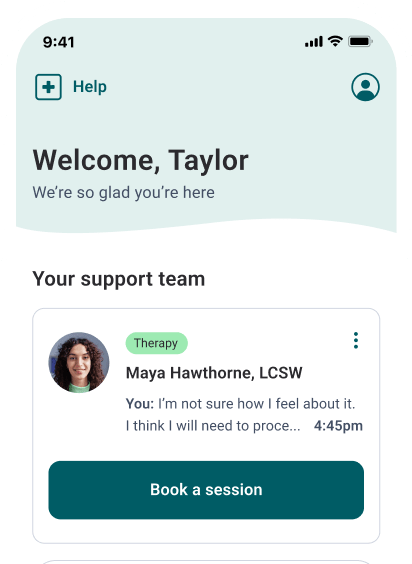
Get support for anxiety, and achieve a calmer mindset with therapy covered by most insurance plans.
Get startedIn online couples counseling, you and your partner will gain insight into your relationship, learn how to effectively resolve conflicts, and improve your overall relationship satisfaction through various couples therapy techniques. Therapists will often assign tasks to the couple so that they can apply the skills learned in therapy in their daily interactions. Most couples conclude and enjoy the benefits of couples therapy with a better understanding of their relational patterns and heightened communication skills, allowing them to continue their relationship in a much healthier, more fulfilling way.
Go to therapy yourself
Whether your partner accepts or resists your suggestion to go to therapy, you should do it yourself. It will help you develop the skills necessary to understand and cope with your partner’s anxiety. A therapist can also teach you how to become a more supportive partner, which will likely help with any potential relationship issues you’re experiencing.
When you are dating someone with anxiety, it’s easy to forget about taking care of yourself. By going to therapy, you can ensure you are still focusing on your own mental health.
Learn to communicate more effectively about their anxiety
Anxiety can be scary. It can make you want to avoid talking about it.
Nonetheless, one of the most effective ways to cope with anxiety in a relationship is to talk about it openly, honestly and directly with your partner.
“Having candid talks together on what they are feeling and validating those feelings is paramount,” said therapist Daryl Cioffi.
To show your romantic partner you accept their anxiety, you need to encourage them to open up about it. Try to listen without judging, becoming defensive or taking their anxiety personally. Provide reassurance and have empathy towards the situation.
"If you start to observe that your partner seems more anxious you should address this with them. This might allow them to share with you why they feel anxious."
— Bisma Anwar, MA, MSc, LMHC
Manage your reactions to their anxiety
When your partner talks about his or her anxiety in the context of your relationship, it’s easy to take it personally and become upset. It’s easy to interpret anxiety as selfishness, rejection or an attempt to create distance, but try not to.
"If you start to feel frustrated with your partner’s anxiety you should take a step back and ask yourself why you are having this kind of reaction. This will help you understand yourself better and prevent you from giving a negative reaction to your partner."
— Bisma Anwar, MA, MSc, LMHC
By practicing your coping skills, you can override this counterproductive default response into something more compassionate. Here is a scenario to help you practice:
Imagine your partner says she has anxiety about you cheating. If you take it personally, you might think she has this anxiety because she judges you or thinks you are the kind of person who is likely to cheat.
The moment you make it about you, you’ll start to feel upset. You might react defensively and say something mean.
"When you react with anger, your response is most likely coming from a place of fear and hurt feelings. Doing your best to not react out of anger is key, and apologizing after for anything hurtful you’ve said or done is crucial to reconciliation."
— Bisma Anwar, MA, MSc, LMHC
Then your partner will strike back. Flash forward to an hour later and you’re fighting. The argument has snowballed. You might not even remember why you are fighting.
Instead of allowing the anxiety to rile you up, take a moment to focus on what works for you in terms of how to calm down when stressed. Remind yourself that the anxiety most likely isn’t about you. You’re not the source of it. It’s about your partner.
Calmly address what your partner is feeling. You can say something like, “I’m really sorry you feel that way. That must be hard. Is there anything we can do to help you feel better about that?”
Managing your reactions is more important than managing your partner’s reactions. It can help you be there for your partner and set boundaries. If your partner’s heightened anxiety causes you to flip out every time they bring it up, it will be impossible to support them.
Set boundaries
When you are dating someone with anxiety, you need to strike a balance between being patient and setting healthy relationship boundaries. Once you recognize how their anxiety influences their behavior, you can cut them slack for behaviors you might not normally have much patience for.
Nonetheless, there should be limits to this. Even severe mental health conditions do not give people a license to be cruel or hurtful.
Here are some examples of boundaries you can set. You can tell your partner these behaviors are not acceptable, even during anxiety attacks and stressful times that cause intense anxiety:
- Insults
- Accusations
- Threats
Tell your partner you expect them to take steps to improve how they cope with their anxiety. This is another part of establishing boundaries.
Shift your mental state to relieve stress
Anxiety causes stress because we instinctively perceive it as a problem, nothing more. This evokes emotion such as anger and fear.
"It can be helpful to remember that feelings are not necessarily facts, but they are trying to tell us something. Asking yourself: What is this anxiety trying to say? This can be helpful in understanding what you might be wanting in the moment, and what you can do to best support yourself. Dialectical behavior therapy (DBT) teaches us about the importance of emotion regulation, and how key it can be to do what works for us to calm our minds and bodies down when we feel anxious, so that we can make the best decisions for ourselves."
— Kate Rosenblatt, MA, LPC, LMHC
Rather than seeing it only as a source of stress, they can develop a curiosity about it. Trying to understand the anxiety makes it more difficult to become angry about it.
How to Support a Partner With Anxiety
There’s a difference between providing support and becoming your partner’s unpaid, unofficial therapist. A therapist isn’t going to hold your partner while they cry or take them out for something to help relieve the anxiety.
"When dating someone struggling with anxiety, it can be helpful to check in with your partner and ask them what feels supportive, and what doesn’t. For example, you could ask if your partner is focusing on anything in therapy to manage or decrease their anxiety symptoms, and if there is anything you can do to help. Sometimes seeing the anxiety as separate and apart from your partner, but rather, something they are struggling with, can help unify you both in working together to manage these symptoms when they arise."
— Kate Rosenblatt, MA, LPC, LMHC
Dos
Author Janet Ruth Heller, Ph.D., has been with her husband, who has anxiety issues, for many years. When his anxiety flares up, she calmly reminds him of what is happening. She also takes him on walks with her, out to dinner or to a movie.
“These activities make him feel loved and secure, and that helps with his anxiety,” she said.
Her story shows it is possible to have a loving and long-term relationship when dating someone with anxiety. Here are some other ways you can support your anxious partner:
- Acknowledge their progress on anxiety issues: If your partner is taking steps to work on anxiety, remember to acknowledge that. Mental health advocate and speaker Alicia Raimundo, who was in a relationship with someone with anxiety, recommended partners “celebrate their strength” when possible.
- Always listen: Even if you are tired or feel like your partner is saying something you have already heard, try to listen carefully. It helps them know you care.
- Include your partner in self-care/mental health rituals: Do you have any rituals or hobbies you use to take care of your mental health? Maybe you’re in to journaling for mental health, meditation for stress, running, or listening to relaxing music. If so, try to include your partner.
"Finding some hobbies together that can have a win-win benefit are great to explore — daily movement and doing something you enjoy is a key protective factor in our mental health. Maybe tennis helps you manage your anxiety and you ask your partner to join you for doubles, or in a tennis lesson. So not only are you managing your anxiety, but you and your partner can find connection in these shared experiences."
— Kate Rosenblatt, MA, LPC, LMHC
Dont’s
To avoid making the anxiety worse, hurting your partner and creating more stress in the relationship, do not:
- Criticize them for having anxiety
- Dismiss their anxiety
- Enable maladaptive anxious behaviors by coddling them too much
- Try to be their therapist
- Take everything personally
- Lose your temper or patience every time the anxiety flares up
- Try to “fix” your partner
- Recommend drugs for their anxiety (you are not a psychiatrist)
Deepening Your Relationship
Anxiety isn’t only a source of stress in a relationship. Anxiety is also an opportunity to understand and love your partner more deeply. The beliefs behind their anxiety are a part of who they are. By learning about anxiety or seeking help from a mental health professional, you can support your partner and look out for your own mental health. Then your relationship can become stronger and more full of joy.