
Key Takeaways
- With Talkspace messaging therapy, you can send unlimited text, audio, or video messages to a licensed therapist anytime and get responses within one business day.
- Research shows message therapy produces outcomes comparable to video therapy when used consistently.
- Many insurance plans cover asynchronous messaging therapy. Insured members often pay $0 copay. Self-pay starts at $69 weekly.
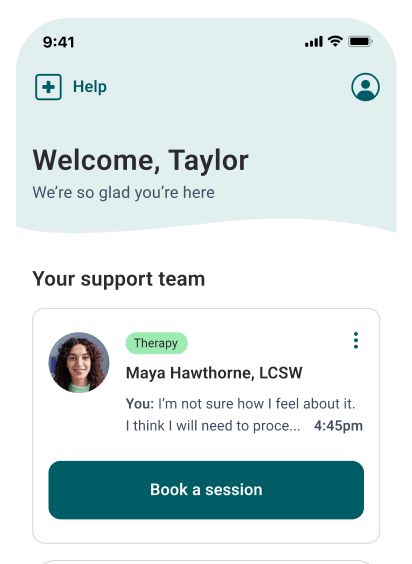
It's 11 p.m., and you desperately want to discuss something with your therapist, but your next appointment is days or even weeks away. Talkspace asynchronous messaging therapy is built for exactly these moments: a secure, private space where you write, record, or speak whenever you wish, and your licensed therapist responds in the same chat.
The need for flexible care is real. According to findings from SAMHSA and HRSA, 61.5 million adults in the U.S. experienced a mental health condition in 2024, and roughly 54 million people aged 12 and older had unmet treatment needs in 2023. Asynchronous messaging therapy is a solution that has been proven to work. This kind of therapy format adapts to your schedule rather than a clinic's calendar, providing a simpler and quicker way for you to get the help you need.
"Asynchronous messaging can help clients reflect, express emotions, and process insights at their own pace compared to live therapy sessions. This can give therapists more time to respond thoughtfully to clients."
- Talkspace therapist Dr. Olga Molina, D.S.W., LCSW
What is Asynchronous Messaging Therapy on Talkspace?
Asynchronous messaging therapy allows members to communicate with a licensed therapist through text, audio, or video messages without needing to be online at the same time. Therapists respond within one business day during working hours.
Talkspace asynchronous messaging therapy means your care doesn't happen in real time. Rather than scheduling a call or video session, you open a private therapy "room" — a secure, HIPAA-compliant virtual space accessible via the Talkspace app or web browser — and send messages whenever it suits you. Your therapist reads and responds during their working hours, 5 days a week. The platform supports three distinct message types, giving you flexibility in how you express yourself. Some things land better on the page; others flow more naturally when you can hear your own voice.
Here's the clearest way to understand how messaging compares to live sessions:
Talkspace offers both formats. Some plans include messaging only or live sessions only, while others bundle messaging with scheduled live sessions, depending on what you need.
How Do You Get Started and Matched With a Therapist?
Getting started with Talkspace asynchronous messaging therapy typically takes about 10-20 minutes. During signup, you'll answer questions to help them match you with a licensed therapist who fits your needs, preferences, and availability.
Here's how the process works:
- Check insurance eligibility: Many major insurance plans cover Talkspace online therapy. If you plan to use insurance, Talkspace makes it easy to check your coverage.
- Create your account: Visit the Talkspace website or download the mobile app, click 'Get started."
- Complete the intake questions: You'll answer questions about what brings you to therapy, your mental health history, and preferences such as therapist gender or communication style.
- Get matched with a licensed therapist: Talkspace connects you with providers who are licensed in your state and trained to deliver online therapy. These therapists may include licensed clinical social workers, licensed professional counselors, marriage and family therapists, or psychologists.
- Consider provider specialties: Many Talkspace therapists have experience supporting specific mental health challenges such as anxiety, depression, relationship concerns, parenting stress, trauma, or work-related stress. The matching system uses your intake responses and availability to identify therapists whose specialties align with your concerns.
Once matched, your private therapy room opens, and you can begin sending messages to your therapist through Talkspace asynchronous messaging therapy whenever it fits your schedule.
How Does Talkspace Messaging Work Day-to-Day?
Messaging exchanges in Talkspace asynchronous messaging therapy take place inside a secure, private therapy "room" that a member can access anytime through the Talkspace mobile app or web browser. Here's exactly what you can do with Talkspace secure messaging therapy:
Sending text, audio, and video messages
There's no message cap on Talkspace messaging sessions. Write a few sentences, record a 5-minute voice memo, or film a short video — the format is yours to choose.
For audio or video messages, a quiet space and headphones improve clarity. A stable internet connection is all the technical setup required for any message type.
Attaching photos or worksheets
Sharing images or worksheets can meaningfully deepen the work between sessions. If your therapist assigned a mood-tracking exercise or you want to share a journal page, you can upload it directly to the room.
All files shared within the therapy room are encrypted the same way your messages are, keeping your uploads within the secure platform. The ongoing, scrollable record of your exchanges also functions as a natural progress log — something traditional weekly sessions rarely offer.
When Will My Therapist Respond to Messages?
With Talkspace asynchronous messaging therapy, you can expect a response within one business day during your provider's working hours, five days a week. Some therapists might respond on weekends if that aligns with their specific working hours. The platform encourages members to discuss specific scheduling preferences directly with their therapist early in treatment.
"Messaging is therapeutically effective because clients and therapists have more flexibility which allows therapy to be more accessible to a client's needs. Therapists can give a more tailored and structured response, enhancing therapeutic effectiveness."
- Talkspace therapist Dr. Olga Molina, D.S.W., LCSW
The quality of the exchange matters as much as the frequency. A 2024 quality-improvement study of 166,644 Talkspace members published on the JAMA Network found that conversations centered on emotional state, daily activities, and self-identity were associated with better symptom improvement.
Licensed Therapists Online
Need convenient mental health support? Talkspace will match you with a licensed therapist within days.
Start therapyWant to get more from each exchange? Follow these practical tips:
- Write with enough detail that your therapist can respond with real depth
- Share context around your mood, your day, and what's driving it — not just the headline.
The asynchronous format means you don't have to think on your feet. Many people find writing helps them articulate things they struggle to say aloud.
How Secure and Confidential are Talkspace Messages?
Talkspace messages are encrypted, HIPAA-compliant, and protected using administrative, technical, and physical safeguards. Talkspace secure messaging therapy is designed to protect members' privacy while allowing flexible communication with a licensed therapist. All conversations take place inside a private virtual therapy "room" on the Talkspace platform, which uses encryption to protect messages and files shared between members and providers.
Talkspace follows the requirements of the Health Insurance Portability and Accountability Act (HIPAA), the federal law that governs how healthcare information must be stored and protected. Messages, files, and personal health information are encrypted both when they're transmitted and when they're stored on Talkspace servers. Administrative, technical, and physical safeguards are also in place to maintain these protections.
Licensed therapists on Talkspace are bound by the same confidentiality and professional ethics standards that apply to traditional in-person therapy. This means providers must protect the privacy of conversations and clinical records, sharing information only in limited circumstances required by law or safety guidelines.
Members' therapy transcripts are treated as medical records and stored in a HIPAA-compliant system. According to Talkspace's retention policy, these records are kept securely for up to 10 years. Talkspace does not sell protected health information, which includes message content, diagnoses, or treatment details.
For members, these safeguards ensure that text, audio, video messages, and shared files remain private. The full details on administrative, technical, and physical safeguards are available in Talkspace's privacy policy.
How Much Does Asynchronous Messaging Therapy Cost?
With insurance coverage, most insured members have a $0 copay.* The Talkspace messaging-only plan, which provides access to Talkspace's secure asynchronous messaging therapy, is $69 per week without insurance coverage. Plans that include live video sessions or additional features cost more. Pricing varies depending on whether you pay out of pocket or use insurance coverage.
Here's a quick look at Talkspace's plan pricing:
Talkspace subscriptions are billed in advance on a recurring schedule, typically monthly. Some plans may also offer quarterly or longer billing cycles, which can reduce the average weekly cost.
*Copays represented are averages for Talkspace members. Please check your insurance coverage; your final copay may vary based on your coverage.
Using insurance for Talkspace therapy
Many health plans now cover Talkspace therapy. During signup, members can enter their insurance information to check eligibility and estimated copays before selecting a plan.
If coverage is available, most insured members pay $0,* depending on their plan. You can check common insurance providers on Talkspace's insurance coverage page. Talkspace also accepts Flexible Spending Account (FSA) and Health Savings Account (HSA) payments. These accounts may allow members to be reimbursed for therapy costs with their tax-free savings, depending on the rules of the specific plan.
Why Choose Talkspace Over Other Messaging Therapy Options?
Talkspace messaging therapy combines asynchronous communication, licensed therapists, insurance coverage, and optional live sessions in one platform. This creates a more flexible way to access mental health care without needing to schedule appointments around a busy day.
Professionals with demanding or unpredictable schedules, new parents, and frequent travelers often benefit from the convenience of asynchronous messaging therapy. The format can also work well for people who express themselves more clearly in writing or recorded audio than in spontaneous conversation. You have time to think before you send.
Research supports the effectiveness of message therapy. A 2025 randomized clinical trial published in JAMA Network Open found that message-based psychotherapy produced outcomes comparable to video-based psychotherapy for adults receiving treatment for depression.
Talkspace research has also found that adults aged 55 and older experienced improvements in anxiety and depression symptoms through message-based therapy, with outcomes comparable to those seen in younger adults. 80% of members reported that Talkspace was as effective as or more effective than traditional therapy, while 98% reported it was more convenient. These findings suggest that asynchronous messaging therapy can provide meaningful support while fitting more easily into daily life.
These findings suggest that asynchronous messaging therapy can be effective for a broad range of people, including those who may face barriers to accessing traditional in-person care. At the same time, it's important to note that messaging therapy may not be the best if you're in acute distress and need an immediate response. If you're ever in a life-threatening situation, call 988 or go to your nearest emergency room.
Some members start with messaging and add live sessions over time to deepen the therapeutic relationship. This flexibility is built into how Talkspace plans are structured.
Talkspace asynchronous messaging therapy fits many people well, though the most honest question to ask yourself is a simple one: Does writing or recording a message feel like something you'd actually do?
If yes, you're already most of the way there. Starting is easier than you might expect. Explore Talkspace's asynchronous messaging therapy plans and get matched with a licensed therapist today.
Frequently Asked Questions (FAQs)
Is asynchronous message therapy as effective as traditional therapy?
Yes, it can be. A study in Telemedicine and e-Health journal of asynchronous mobile-enabled text psychotherapy found clinically significant improvement in 46% of participants, supporting the effectiveness of message-based care. Talkspace research has also found that many members view messaging therapy as equally effective as traditional therapy while offering greater convenience.
Who is asynchronous messaging therapy best suited for?
Asynchronous messaging therapy works well for people with unpredictable schedules, frequent travelers, busy professionals, and those who express themselves more clearly in writing. It's also effective for people managing anxiety, depression, relationship concerns, or work stress who prefer flexible communication over scheduled appointments.
Can I use insurance to pay for asynchronous message therapy on Talkspace?
Yes. Many major insurance plans cover Talkspace messaging therapy. During signup, enter your insurance details to check eligibility and estimated copays. Most insured members have a $0 copay*, though your final cost depends on your specific plan coverage.
*Copays represented are averages for Talkspace members. Please check your insurance coverage; your final copay may vary based on your coverage.
What devices can I use for asynchronous message therapy?
You can access Talkspace messaging sessions through the Talkspace mobile app on iOS and Android devices or through any web browser on your computer or tablet. Text, audio, and video messages work on all supported devices with a stable internet connection.
How do I know if asynchronous messaging therapy is right for me?
Consider whether writing or recording messages feels natural to you. If you prefer reflecting before responding and want care that adapts to your schedule rather than fixed appointments, asynchronous messaging therapy may fit well. Starting with messaging doesn't prevent adding live sessions later.
Can I switch from messaging to live sessions later?
Yes. If you pay with insurance, live sessions are already covered. If paying out-of-pocket, Talkspace plans range from messaging-only to bundles that include both live sessions and messaging. You can upgrade your plan or add individual live sessions for $65 each anytime.
Do I need Wi-Fi to send messages?
A stable internet connection is required to send and receive messages, and both Wi-Fi and cellular data work. Audio and video messages may take longer to upload on slower connections, so using Wi-Fi is recommended for these formats.
What if my therapist is on vacation?
Talkspace encourages members to discuss scheduling preferences, including planned absences, directly with their provider. Your therapy room remains accessible while your therapist is away. If you need additional support in the interim, Talkspace's care team can help explore options.
Are my messages stored permanently?
Your therapy transcripts are securely retained for 10 years in a HIPAA-compliant manner and treated like confidential medical records. Members can access past messages within their therapy room to review conversations and track progress over time.
Is messaging therapy suitable for emergencies?
No. Talkspace asynchronous messaging therapy is designed for ongoing mental health care, not immediate crisis support. If you're in immediate danger or experiencing thoughts of suicide, call 988 or go to the nearest emergency room immediately.
Sources
- Substance Abuse and Mental Health Services Administration. National Survey on Drug Use and Health, 2024 findings (summary). National Alliance on Mental Illness. https://namivos.org/samhsa-annual-survey-on-drug-use-and-health. 2025. Accessed March 09, 2026.
- Health Resources and Services Administration. Behavioral health care provider model components. HRSA. https://bhw.hrsa.gov/data-research/projecting-health-workforce-supply-demand/technical-documentation/behavioral-health-care-provider. 2024. Accessed March 09, 2026.
- Imel ZE, Tanana MJ, Soma CS, et al. Outcomes in mental health counseling from conversational content with transformer-based machine learning. JAMA Network Open. https://jamanetwork.com/journals/jamanetworkopen/fullarticle/2814116. 2024 Jan 22;7(1):e2352590. Accessed March 09, 2026.
- Pullmann M, Areán PA, Raue PJ, et al. Message-based vs video-based psychotherapy for depression: A randomized clinical trial. JAMA Network Open. https://jamanetwork.com/journals/jamanetworkopen/article-abstract/2840708. 2025 Oct 30;8(10):e2540065. Accessed March 09, 2026.
- Hull TD, Mahan K. A study of asynchronous mobile-enabled SMS text psychotherapy. Telemedicine and e-Health. https://journals.sagepub.com/doi/abs/10.1089/tmj.2016.0114. 2017;23(3). Accessed June 15, 2026.
Talkspace articles are written by experienced mental health-wellness contributors; they are grounded in scientific research and evidence-based practices. Articles are extensively reviewed by our team of clinical experts (therapists and psychiatrists of various specialties) to ensure content is accurate and on par with current industry standards.
Our goal at Talkspace is to provide the most up-to-date, valuable, and objective information on mental health-related topics in order to help readers make informed decisions. Articles contain trusted third-party sources that are either directly linked to in the text or listed at the bottom to take readers directly to the source.