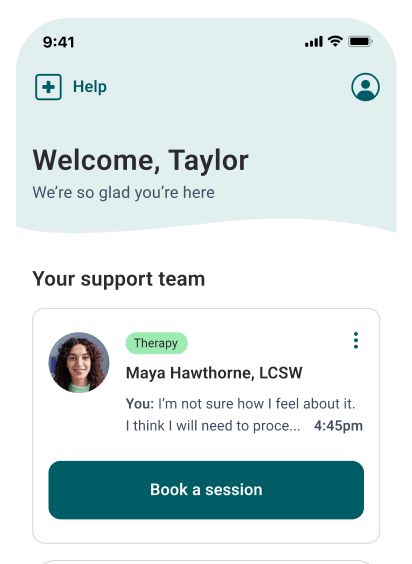


Key Takeaways
- AI mental health tools can offer short-term support, but meaningful therapy helps you understand patterns and make real progress.
- Talkspace therapy is delivered by licensed therapists, grounded in clinical standards and ethics.
- Human-led care prioritizes safety, trust, and long-term progress, not just momentary relief.
The last few years have brought a surge of AI-driven mental health bots, chat-based “coaching,” and automated wellness tools. Some of the AI therapist apps offer helpful features, but they’re not a substitute for therapy with a licensed provider.
By 2025–2026, though, many of these platforms began positioning themselves as therapy alternatives, blurring the line between support and clinical care. For mental health advocates, this moment matters because it’s a turning point. AI is rapidly changing the mental health space, and that shift brings both possibilities and serious risks.
It’s critical to protect the difference between real therapy and tools that only sound therapeutic. Technology can support mental health care, but it can’t replace the clinical judgment and crisis-readiness of a licensed therapist. That’s where Talkspace therapy stands apart. Talkspace combines modern technology with human-led care, operating under regulations and clinical standards that protect member safety and support real therapeutic relationships.
Let's break down what truly differentiates Talkspace therapy from AI-only mental health tools, and why that distinction matters.
Is AI Mental Health Support Actually "Therapy?"
AI support isn't the same as therapy. Even though it sounds thoughtful or comforting, it's not the same as working with a licensed therapist. AI tools often call themselves “coaching” or “guided support.” They generate responses based on language patterns, whereas therapists respond based on years of education and training, and based on human understanding of your unique situation.
AI mental health tools can mirror your words, offer generic advice, or validate common emotions, but they cannot read between the lines of what’s being said. They can’t understand your personal history or recognize risk the way a trained human can.
Therapy, on the other hand, is grounded in clinical judgment, experience, and a therapeutic alliance, a working relationship built on trust and accountability.
If you say you're "fine," a therapist can pick up on subtle cues like a shift in tone, inconsistencies with previous statements, or signs of emotional distress that you might not have explicitly mentioned. In contrast, an AI tool would simply take your word for it, missing those nuanced signals.
How Does the "Therapeutic Alliance" Impact Patient Outcomes?
The therapeutic alliance is a trust-based, collaborative bond between a therapist and the individual they’re supporting. It includes having mutual understanding, shared goals, and feeling a sense that the therapist truly “gets” you.
According to a study published in the journal Psychotherapy, a strong relationship between a therapist and their client is one of the biggest reasons therapy works, no matter the type of therapy or mental health challenge.
This kind of relationship is built over time, through real conversations and emotional attunement. A licensed therapist brings clinical training, but they also bring humanity—things like curiosity, compassion, and the ability to sit with you through the hard stuff without rushing to fix it.
An AI tool, no matter how responsive or advanced, can’t offer that. It doesn’t form bonds. It doesn’t adapt emotionally in real time. And it can’t enter into a legal or ethical relationship where someone is accountable for your care. In therapy, that accountability matters. Therapists have an ethical and legal duty to prioritize your well-being. AI doesn’t, and can’t, share that responsibility.
Licensed Therapists Online
Need convenient mental health support? Talkspace will match you with a licensed therapist within days.
Start therapyWhat are the Safety and Ethical Risks of AI-Only Platforms?
Safety is essential in mental health care. Talkspace therapy is built around licensed human care, which means trained therapists are equipped to recognize and respond to high-risk situations like self-harm or thoughts of suicide.
They’re also prepared to navigate complex trauma, which often shows up in layered, less obvious ways. Providers follow strict clinical protocols and can escalate care when needed because they’re trained to notice when something feels off, even if a person isn’t saying it outright.
AI platforms, by contrast, aren’t legally or ethically responsible for someone’s safety. They don’t understand emotional context or clinical risk as a licensed therapist does. And they can’t be held accountable for missing a red flag.
Can an AI truly manage a mental health crisis?
AI tools cannot handle a mental health crisis. While they might be able to reflect feelings or offer surface-level suggestions, they’re limited by design. These systems generate responses based on patterns, not clinical expertise or emotional nuance.
This can lead to “hallucinations,” a term for when AI confidently gives inaccurate or misleading information. In mental health care, even small errors can have serious consequences.
At Talkspace, licensed therapists are trained to spot early warning signs, ask clarifying questions, and take action if someone is in danger. Talkspace therapy is delivered by real people with clinical training; therefore, it stays grounded in empathy and safety.
How does Talkspace ensure HIPAA-compliant, human-vetted data privacy?
Talkspace is a covered healthcare provider, which means it must comply with HIPAA guidelines for protecting your health information. All messages and sessions are encrypted and stored on secure servers, and only authorized clinical staff can access them.
This sets Talkspace apart from many wellness or self-care apps that aren’t subject to medical privacy standards. Some of these tools collect sensitive data and may share or sell it to third parties. As a licensed medical service, Talkspace ensures that your information remains strictly confidential, always staying between you and your provider.
How Does Talkspace Use AI to Support, Rather Than Replace, Clinicians?
At Talkspace, AI supports high-quality human-first care. This approach is all about using technology to help providers do their work more efficiently and effectively, without attempting to automate the relationship at the core of therapy.
For example, tools like Smart Notes help reduce the time therapists spend on documentation by automatically drafting session notes that they can review, edit, and finalize. This means less time on admin and more time focused on care.
Other AI tools for therapists, such as Smart Insights, give therapists a quick, helpful view into a member’s recent messages or clinical patterns before a session starts, helping them come prepared and ready to connect.
These features are optional, editable, and always under the therapist’s control. They're designed to save time and surface useful information, but they don’t make decisions for a therapist or replace human judgment.
"AI-driven features on the Talkspace platform include summarizing sessions, streamlining documentation, and highlighting risk indicators. These tools allow therapists to focus more on client care and less on administrative tasks. AI can help clinicians increase efficiency while providing quality care and clinically based interventions."
- Talkspace therapist Bisma Anwar, LPC, LMHC
What is the Real Value of Human-Led Therapy for Individuals?
AI mental health tools can feel helpful in the moment, especially when someone needs to feel heard or calm their mind. But licensed therapy is about more than momentary relief. It’s focused on long-term growth and real change that leads to healing.
A licensed therapist goes beyond responding to keywords or scripts; they use clinical expertise to adapt their approach as your life evolves. This might involve addressing work stress, relationship changes, or problems like reproductive health and identity shifts.
Seeing the same provider over time also builds something AI can’t: trust. You don’t have to start over with every new session or re-explain your history. This continuity creates space for deeper insight and lasting momentum, for individuals and for relationships. For instance, couples therapy with Talkspace gives both partners a space to grow together with help from a licensed provider.
At Talkspace, every member works with a licensed therapist. The care is clinically sound and designed to help people feel better and get better, not just manage symptoms at the surface. Its online therapy offers a way to build real progress with support that’s personalized and grounded in human care.
Start building meaningful progress with personalized, clinically sound therapy at Talkspace today.
Frequently Asked Questions
Does Talkspace use AI to write therapist responses?
No. Therapist responses on Talkspace are never written by AI. While the platform offers optional AI tools to help therapists manage tasks such as note-taking and message review, all therapeutic communication comes directly from a trained, licensed provider who understands emotional nuance and clinical context.
How do I know if I need therapy versus an AI mental health tool?
Therapy is the better choice if you're looking for ongoing support, deeper self-understanding, or help navigating complex or changing challenges. AI tools might be useful for momentary guidance or stress relief, but they aren't designed to address root causes or provide personalized care over time as a licensed therapist can.
How does Talkspace vet its providers to ensure they are better than a high-end AI?
Talkspace providers are licensed therapists who have completed advanced clinical training and meet strict credentialing requirements. Before joining the platform, every provider undergoes a thorough vetting process to verify their qualifications, experience, and commitment to delivering ethical, effective care—something no AI tool can replicate.
Sources
- Tryon, G.S., Birch, S.E., Verkuilen, J. Meta-analyses of the relation of goal consensus and collaboration to psychotherapy outcome. Psychotherapy. https://psycnet.apa.org/doiLanding?doi=10.1037%2Fpst0000170. 2018 Dec; 55(4): 372-383. Accessed February 06, 2026.

%20(2)%20(1).jpg)