

Who Can Diagnose Schizophrenia?
Typically, psychiatrists who specialize in mental health and are trained to assess the mental and physical aspects of psychological conditions, are qualified to diagnose schizophrenia. In some cases, clinical psychologists, equipped with specific training in psychiatric disorders, can also conduct assessments. These professionals use a combination of clinical interviews, psychological evaluations, and medical examinations to ensure an accurate diagnosis, adhering to the criteria set forth in the DSM-5-TR. It’s crucial to consult these specialists for a reliable diagnosis, as they possess the expertise to differentiate schizophrenia from other mental health disorders.
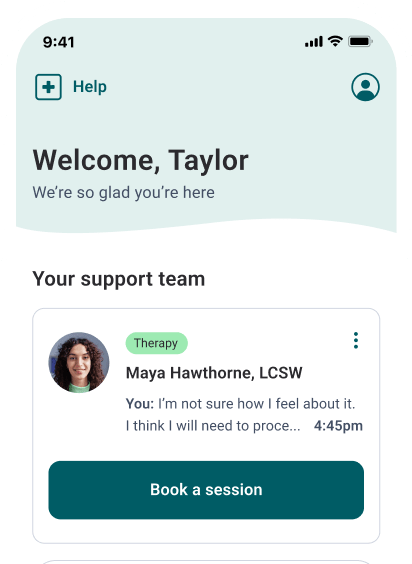
Our psychiatric providers at Talkspace can make the process of getting a diagnosis and treatment for schizophrenia as accessible as possible. From the comfort of your own, you can connect with a mental health professional for evaluation. You can also receive continued assessment and guidance through online therapy, complementing the traditional diagnostic process. This approach not only aligns with the standards of psychiatric care but also provides a flexible, confidential space for you to understand and manage your condition from the comfort of your home.
How Is Schizophrenia Diagnosed?
Diagnosing schizophrenia is a comprehensive process that involves interviews, reviewing negative and positive symptoms, and observing behaviors. There’s a concrete diagnostic process for schizophrenia that’s detailed through criteria outlined in the American Psychiatric Association’sDiagnostic and Statistical Manual of Mental Disorders, Fifth Edition(DSM-5-TR) — the standard diagnosis manual used by mental health professionals.
Diagnosis process
In the initial stages, schizophrenia typically involves declining functioning and mild psychosis. During this period, someone may begin having strange beliefs or bizarre perceptions. A diagnosis generally isn’t made at this point, until more distinct and obvious symptoms of psychosis emerge. Even then, a diagnosis would only come after dismissing all other possible causes for the psychotic symptoms being exhibited.
Doctors diagnose schizophrenia by performing a thorough physical exam and carefully reviewing family, psychiatric, and medical history. They’ll ask about any unusual experiences or distressing perceptions.
Other possible topics of conversation during diagnosis will likely include discussions about cognition, motivation, and life goals. A doctor will also look for any indications of self-harm.
DSM-5-TR criteria for schizophrenia
According to the DSM-5-TR, the diagnostic criterion for schizophrenia requires that someone demonstrates at least 2 of the 5 primary common symptoms, which include:
- Delusions — false beliefs that aren’t based in reality
- Hallucinations— seeing and/or hearing things that aren’t there
- Disorganized or incoherent speech — disorganized speech often suggests disorganized thinking
- Disjointed or other unusual movements — abnormal motor behavior or catatonic behavior
- Negative symptoms — avolition (a near-total lack of motivation), diminished emotional expression, social withdrawal, lack of interest in the world and people around, and little or no sense of purpose are the most common negative symptoms
According to the DSM-5-TR, the strongest symptom that presents itself must be present for at least 1 month for a diagnosis to be made. Lesser symptoms will have been present for at least 6 months.
Further, the DSM-5-TR also states that an accurate schizophrenia diagnosis can’t be made unless significant disruptions to either professional, family, and/or social life are seen.
Tests that diagnose schizophrenia
There are no specific diagnostic tests for schizophrenia. A diagnosis must be made on a case-by-case basis. There are, however, several tests doctors might run to get a better picture of what’s going on with someone from both a physical as well as a mental health perspective. They can use test results to rule out other potential conditions with similar symptoms before determining if any specific symptoms are related to schizophrenia.
Some of these tests can include:
- Magnetic resonance imaging (MRI)
- Bloodwork
- Urine analysis
- Spinal tap (lumbar puncture)
- Brain scans
“Usually, healthcare providers run tests such as magnetic resonance imaging (MRI), spinal tap, and blood and urine, to rule out other conditions before diagnosing schizophrenia. There are no specific diagnostic tests for schizophrenia.”
— Bisma Anwar, Licensed Mental Health Counselor (LMHC), MA, MSc
MRI
MRI scans create 2- and 3-dimensional images of inner-brain structures. Doctors can use these images to rule out any brain anomalies that could cause symptoms that falsely present like schizophrenia.
Blood test
Analyzing blood can help a doctor rule out other reasons for symptoms. Things they might screen for through a blood test can include excessive alcohol and/or substance abuse, other physical health conditions, or any potential adverse side effects from prescription medication.
Essentially, they’re looking for anything that might be causing similar symptoms to what is common with schizophrenia. Bloodwork also allows your doctor to get a good picture of your nutrient and enzyme levels, which could also cause or exacerbate certain symptoms.
Electroencephalogram (EEG)
An EEG records electrical activities inside the brain. This test can help rule out other conditions that might mimic some of the schizophrenia symptoms, like epilepsy, for instance. EEGs are also one of the most common tests used in schizophrenia research.
How to Receive a Schizophrenia Diagnosis through Talkspace
If you have symptoms that resemble those of schizophrenia you should get answers without delay. With Talkspace it’s fast and convenient to connect with a mental health provider for an evaluation of your symptoms and, if appropriate, a diagnosis.
Talkspace makes it affordable to receive schizophrenia diagnosis and treatment, with online therapy and psychiatry plans that take insurance. Coverage for schizophrenia treatment will depend on your insurance company and health plan, but a typical copay is $25, often less. If your insurance doesn’t cover Talkspace, check with your employer to see if they cover Talkspace mental health services directly (many do), use an FSA/HSA card, or pay out-of-pocket at a cost that’s less than most in-person providers.
Here’s how it works:
- Get started any time by answering a few questions on the Talkspace website or app. You don’t need a referral for either therapy or psychiatric care.
- You’ll be connected with a therapist within about two days or a psychiatric provider within about a week.
- If you choose to start with therapy you can message with your therapist as much as you like and also schedule live sessions. If you choose psychiatry you’ll schedule a live video session with your psychiatric provider.
Usually schizophrenia is most effectively treated with a combination of medication and talk therapy. Online therapy helps you manage symptoms and develop coping skills, while online psychiatry addresses the physiological basis or your symptoms, usually with a prescription for medication and ongoing medication management.
What to Do if You Get Diagnosed with Schizophrenia
To get an accurate diagnosis, schizophrenia symptoms must be assessed by a trained doctor or psychiatrist. Psychiatrists are specialized in and qualified to assess mental health conditions. Diagnosing schizophrenia is complicated and takes time. It’s important to remain committed to the process and to cooperate with your doctor’s requests.
If you receive a schizophrenia diagnosis, there are several important things you can do when it comes to how to deal with schizophrenia, including:
- Make notes for your doctor about any new or worsening symptoms
- Comply with taking your antipsychotic medication or other schizophrenia medications as prescribed
- See your doctor as recommended
- Avoid alcohol and drugs
- Seek support
- Begin therapy for schizophrenia
“Treatment of schizophrenia is usually a combination of therapy and medication management. There are chances of better outcomes when there is early diagnosis and treatment.”
— Bisma Anwar, Licensed Mental Health Counselor (LMHC), MA, MSc
Successful schizophrenia treatment plans that are most effective in managing the symptoms of schizophrenia involve a combination of antipsychotic medication and either in-person or online therapy.
Early diagnosis and treatment can result in significantly better outcomes for this challenging mental health condition, especially with schizophrenia in children. Don’t hesitate to contact your doctor if you think that you or a loved one is showing signs or symptoms of schizophrenia. Your doctor can refer you to the right psychiatric services for a full, comprehensive assessment.
How to Treat Schizophrenia
The most important part after diagnosing schizophrenia is seeking treatment as soon as possible. A good mental health treatment team can help alleviate symptoms, teach you coping strategies to navigate life’s challenges, and help you work on living a healthier lifestyle.
The main types of schizophrenia treatment include:
- Cognitive-behavioral therapy (CBT)
- Art therapy
- Group or family therapy
- Atypical antipsychotics
- Typical antipsychotics
- Holistic (natural) treatment for schizophrenia
Two or more of these treatments are generally used together, and it’s essential for anyone living with schizophrenia to keep up with their treatment program. Often, people start feeling better and believe they can quit treatment and medication, only for symptoms to reoccur, sometimes much more severe than before.
Psychotherapy
Psychotherapy has the potential to address some of the negative symptoms of schizophrenia that antipsychotic medication alone likely cannot.
“Psychotherapy is also referred to as talk therapy. It allows the client to talk through some of the stresses and emotions that they’re dealing with related to the diagnosis.”
— Reshawna Chapple, Licensed Clinical Social Worker (LCSW), PhD
Psychotherapy can help you and your family navigate schizophrenia symptoms, so it doesn’t control your life. Several types of talk therapy can reduce and alleviate symptoms, allowing you to perform better in daily activities, develop meaningful, healthy relationships, and improve your overall quality of life.
Cognitive-behavioral therapy (CBT)
Cognitive-behavioral therapy (CBT) is effective for a broad range of psychological conditions, including anxiety disorders, relationship problems, drug or alcohol abuse, eating disorders, and mental health conditions like schizophrenia. This type of talk therapy helps people look at how they think and behave, identify areas that are problematic or unhealthy, and begin to change thoughts and actions into healthier responses.
CBT teaches you to see situations, thoughts, feelings, emotions, and actions individually, so you can discern the origin of unhealthy patterns. It also teaches coping skills and helps you set and achieve goals, both in therapy and in your day-to-day life.
“Cognitive behavior therapy (CBT) helps you change how you think and react to situations. It also teaches you to deal with negative feelings and behaviors by replacing them with more positive thoughts and behaviors. CBT can also help you learn to control emotions, solve problems, and understand others’ behavior.”
— Reshawna Chapple, Licensed Clinical Social Worker (LCSW), PhD
Cognitive enhancement therapy (CET)
Cognitive enhancement therapy (CET), also known as cognitive remediation, is a system of cognitive training that’s helpful for some adults with schizophrenia or schizoaffective disorder. It’s a recovery-phase therapy used for people who have relatively stable symptoms, but who might lack certain vocational and social skills.
More specifically, CET focuses on improving memory, motivation, organization, social adjustment, and cognition. It’s also heavily focused on vocational, familial, and social functioning.
Psychosocial Therapy
Psychosocial therapies combine elements of psychotherapy, vocational training, and social training to educate, support, and guide people living with schizophrenia. It typically involves:
- Family education therapy
- Coordinated specialty care (CSC)
- Assertive community treatment (ACT)
- Social skills training
- Self-help groups
- Rehabilitation
Let’s examine each of these psychosocial schizophrenia therapies more closely.
Family education therapy
Family education therapy focuses on teaching a family unit how to work together whenever problems arise after diagnosing schizophrenia. Together, you and your family will learn to collectively discuss the problems at hand and determine the best solutions for everyone.
“Family therapy can help the diagnosed client and their family deal with stress related to the illness, learn to better manage emotional situation, learn to process emotions, and solve problems related to the illness and the family dynamics that the illness may cause.”
— Reshawna Chapple, Licensed Clinical Social Worker (LCSW), PhD
Coordinated specialty care (CSC)
CSC is another recovery-phase treatment that helps people with schizophrenia via a team-based approach.
Multiple specialists collaborate with you to devise a personalized program that typically combines talk therapy, medication management and compliance, family education, vocational support, and ongoing case management.
Assertive community treatment (ACT)
Assertive community treatment (ACT) therapies for schizophrenia help someone follow treatment and reduce the risk of hospitalization. It’s a behaviorally-oriented subcategory of CBT that uses counter-conditioning and positive reinforcement to change how you respond to emotions, impulses, thoughts, and physical feelings (known as “inner experiences”).
This community-based treatment approach most often involves social workers, psychiatrists, physicians, nurses, therapists, and case workers. ACT teams provide multidisciplinary treatment that flexes with your needs, offering 24/7/365 support.
Social skills training
Social skills training involves a set of techniques that help someone with schizophrenia enhance their ability to have social interactions. By addressing specific skill insufficiencies, you’ll start to curtail those negative symptoms of schizophrenia and improve critical social functioning that can help you maintain healthy relationships and positive personal interactions.
Specific methods used might include role-playing, didactic instruction (teacher-directed instruction), modeling, supervised interactions, social problem-solving skills, and reinforcement techniques.
Self-help and group therapy
Group counseling can help people living with schizophrenia learn and improve their social skills. Self-help groups allow you to gain new insights into other schizophrenia therapies, helping you deal with deep feelings of isolation that are common with the condition.
Participation in self-help or therapy groups can allow you the space and opportunity to vent frustrations, challenges, and successes in a safe setting that feels comfortable and supportive. Family participation is typically encouraged, and it’s not uncommon for friendships to form amongst group members. Many people find that sharing similar mental health challenges and experiences can be a cathartic and healing experience.
Self-help group therapy can be effective in helping you improve work skills, social skills, treatment adherence, medication compliance, and interpersonal relationship skills.
Rehabilitation
Psychosocial rehabilitation therapy for schizophrenia encourages people to enhance their intellectual, emotional, and social skills so they can ultimately live happier lives. Rehabilitation programs encourage you to feel confident in your own ability to manage things on your own, with the least amount of assistance and intervention possible. You’ll be taught new coping skills so you can more successfully manage stressful events.
Rehabilitation treatment varies from person to person but typically includes individual and family counseling, independent living training, vocational training, medication management, job counseling, and emotional support.
Medications for Schizophrenia
Antipsychotic drugs are the primary class of medications used in schizophrenia treatment. These medications help ease delusions, hallucinations, anxiety, and other similar symptoms of schizophrenia.
How does medication treat schizophrenia?
Antipsychotic medication works by altering abnormal receptors in the brain and blocking the kind of neurotransmitters that send abnormal thoughts and images to the brain. By blocking how the chemical dopamine affects the brain, antipsychotic medication can be effective at lessening delusions and hallucinations and preventing them from reoccurring…as long as it’s consistently taken.
“Antipsychotics is the class of medications that are used in the treatment of schizophrenia. These medications help block the effects of chemical dopamine in the brain. Antipsychotics work to decrease anxiety and/or aggression almost immediately after taking them. With longer term use, they help decrease symptoms such as hallucinations or delusions.”
— Bisma Anwar, Licensed Mental Health Counselor (LMHC), MA, MSc
Types of medication for schizophrenia
Antipsychotic medications used for the treatment of schizophrenia are divided into what are called first-generation (typical) and second-generation (atypical) schizophrenia medications.
Atypical antipsychotics are second-generation antipsychotics, meaning they’re newer and may have less severe side effects. It’s important to note, though, that some may increase the risk of weight gain and hyperglycemia.
Atypical antipsychotics to treat schizophrenia include:
- Abilify (Aripiprazole)
- Fanapt (Iloperidone)
- Geodon (Ziprasidone)
- Invega (Paliperidone)
- Latuda (Lurasidone)
- Risperdal (Risperidone)
- Rexulti (Brexpiprazole)
- Saphris (Asenapine)
- Seroquel (Quetiapine)
- Vraylar (Cariprazine)
- Zyprexa (Olanzapine)
Typical antipsychotics are first-generation medications. Typical antipsychotic treatment is older, may have more severe side effects, and are generally only used when atypical medications haven’t been effective.
Typical antipsychotics to treat schizophrenia include:
- Haldol (Haloperidol)
- Loxitane (Loxapine)
- Navane (Thiothixene)
- Prolixin (Fluphenazine)
- Thorazine (Chlorpromazine)
- Trilafon (Perphenazine)
- Stelazine (Trifluoperazine)
Holistic Treatment for Schizophrenia
There are several holistic and natural remedies for schizophrenia that might help reduce the symptoms of schizophrenia. However, these are typically recommended alongside traditional medications. These can include:
- Vitamin B supplements: According to a study from the University of Manchester (UK), adding high doses of B vitamins in addition to other forms of treatment might significantly reduce schizophrenia symptoms.
- Foods rich in Omega-3 fatty acids: Foods like salmon, sardines, and mackerel might potentially help to reduce psychosis, particularly in adolescents, according to a 2020 study by researchers at I-Shou University in Taiwan.
- Deep brain stimulation (DBS): This schizophrenia treatment targets a part of the brain that controls learning, behaviors, and emotions. DBS has been shown to alleviate treatment-resistant symptoms of schizophrenia in some people, according to Johns Hopkins Medicine researchers.
- CBD: Cannabidiol (CBD), in states where it’s legal, might be another good holistic treatment option for people with schizophrenia. Cannabis with a high cannabidiol content was associated with significantly fewer psychotic symptoms in a 2011 study done by doctors at University Medical Centre Utrecht.
NOTE: Caution must be taken, and more research still needs to be done, as high THC content has been associated with more severe psychotic symptoms in some people. - Mediterranean diet: A Mediterranean diet, which emphasizes whole grains, fruits, vegetables, and legumes (and discourages dairy products, red meat, and processed foods), can be a good option for anyone who wants to use a diet to enhance their health. This type of healthy eating can help reduce inflammation, which is thought by some to be a trigger for schizophrenia. A 2020 study done at Seoul Women’s University in Korea suggests that a diet with anti-inflammatory agents might reduce and improve the severity of symptoms associated with schizophrenia.
Benefits of a holistic approach
Some other common holistic approaches to managing symptoms of schizophrenia include intake of vitamin C and E as well as folic acid supplements. These have been found to help effectively manage schizophrenia symptoms for some people. Taken alongside antipsychotics, they might provide relief.
Combining holistic treatments with traditional ones offers a number of benefits. For one, a combined treatment method can help people and their families feel more in control of treatment plans.
Such treatment options also help people focus on things that are just good for optimal health in general, like reducing stress, eating a healthy diet, and getting enough sleep.
Some people who live with schizophrenia don’t have healthy living habits, and additionally, some antipsychotic medications can lead to weight gain. As many as 60% of people diagnosed with schizophrenia are considered clinically obese. Countering those trends with healthy lifestyle choices can only help.
The Importance of Sticking to Treatment
If you’re wanting to know more about how to treat schizophrenia, one of the most important things to understand is how essential sticking with your treatment and following the treatment guidelines of your mental health care team is.
It can be tempting to set aside medications, especially when you start to feel better, but that can lead to symptoms returning, often with greater intensity. Coping successfully with schizophrenia depends on carefully following a well-planned course of treatment. Treatment benefits tend to build over time.
Find Treatment for Schizophrenia with Talkspace
Talkspace offers help for people trying to live and cope with schizophrenia. Our online therapy platform makes getting the help you need easy, affordable, and convenient. No drives to appointments that tack on hours to your sessions, no scheduling headaches trying to fit your therapy commute into your already-busy work week, and no uncomfortable office settings.
With Talkspace, you can get therapy, seek medication, and learn to manage your schizophrenia or any other mental health condition, right from the comfort of your own home. Find out why so many people are seeing success with Talkspace.