

Get a Psych Evaluation
Want to know how to get diagnosed with depression? The process begins by reaching out to your family doctor or another medical professional and requesting a psychological evaluation. While there isn’t a specific laboratory test that can show depression, there is a standard procedure that leads to a depression diagnosis. A doctor will conduct a full evaluation and likely do blood work to rule out any medical conditions that may be contributing to any depression symptoms.
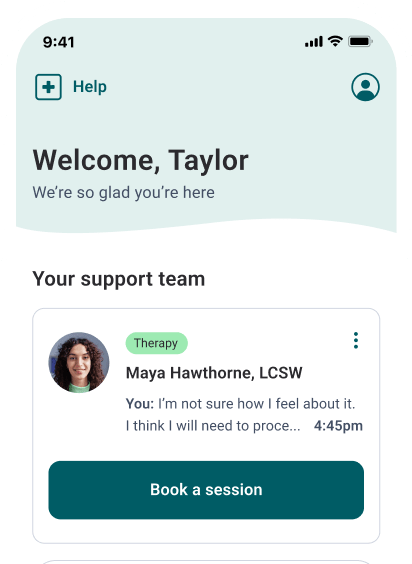
If you’re seeking an alternative or more accessible approach, Talkspace offers a supportive path. After your initial medical consultations, you can connect with our online mental health providers for further assessment. We specialize in diagnosing depression and providing a personalized treatment plan without the need for in-person visits. This simplifies your mental health journey, allowing you to start your treatment from the comfort and privacy of your home.
How Does a Doctor Diagnose Depression?
If you’ve been in a continuously depressed mood lately, it’s normal to be wondering: How do I get diagnosed with depression? Doctors look for certain key symptoms when diagnosing someone for depression. They consult the Fifth Edition of the Diagnostic and Statistical Manual of Mental Disorders (DSM-5) to make a depression diagnosis. The DSM-5 states you need to have experienced at least 5 of the following symptoms, for a minimum of two weeks, to be diagnosed with major depressive disorder (MDD).
- Sadness
- Appetite change
- Inability to focus
- Irritability and agitation
- Consistent lack of energy
- Feeling worthless or guilty
- Repetitive thoughts of suicide or death
- Problems falling asleep or staying asleep
- Loss of interest in things you once enjoyed
- Feeling detached, like you’re moving in slow motion
It’s not uncommon for a primary doctor to refer you to a psychiatrist or other licensed mental health professional. This could be the case, especially if your blood work and other preliminary tests don’t show any underlying medical condition that might cause feelings of depression.
What to expect
To prepare — journal: You may be asked to keep a journal of your feelings and thoughts for a period before your appointment. Your entries might offer insight into important information about your mental health condition, low mood, and why you’re feeling depressed. Don’t hold back while writing. Be as candid as possible.
List your medications: You’ll be asked to bring a list of the medication you’re currently taking. They’ll want to know about recreational drugs, prescription medications, vitamins, over-the-counter drugs, and natural medicines.
Types of assessments: Your evaluation can take several hours to complete. You’ll undergo in-depth psychological evaluation and testing. A doctor can reference several sources to assess you, including:
- Observational and medical evaluation data
- Questions about your behavior, mood, and daily activities
- Norm-referenced psychological tests
- Questionnaires like the Zung scale, the Hamilton Depression Rating Scale (HDRS), or the Beck Depression Inventory (BDI)
- Informal tests and surveys
- Interview information
- Medical records
- Family psychological history
Bring someone with you: You might bring your significant other or another family member to your evaluation appointment. They may be able to provide unique perspectives and insights that can help the doctor accurately assess your condition and needs. It can also be beneficial for your significant other to learn about dating someone with depression from a professional.
Make a list of questions: In the days before your assessment, it’s a good idea to make a list of any questions you have. This will help you to remember to address issues that are most important and have the most impact on your life.
There’s no standard psychological assessment that works for all people equally. Having depression diagnosed isn’t a one-size-fits-all process. Your doctor will choose the types of assessments and tests they feel are best suited for your unique circumstances. Be prepared for lengthy testing sessions and to answer sets of similar questions repetitively during the depression screening process.
There are no physical risks involved with a psychological evaluation. However, you should know that it’s pretty common to experience a surge of emotions during the diagnostic process. Some reactions to psychological evaluations can include fear, anxiety, resentment, and hostility. Breathe deeply, relax your mind, answer all the questions to the best of your ability and honestly, and trust your doctor to make an accurate diagnosis.
There are several different types of depression. Determining which you have is essential to you getting the best help possible. A doctor may diagnose you with:
- Major depressive disorder (MAD)
- Seasonal affective disorder (SAD)
- Postpartum depression
- Atypical depression
- Cyclothymia
- Dysthymia
“Understanding depression and how it looks and feels for you can be a helpful first step in learning about options for how to start to feel better. Working with a licensed mental health professional on managing and decreasing your depression symptoms can take some time and experimenting to see what works for you, but the process will be worth it. You will not feel this way forever, there is hope, and you deserve help.”
— Kate Rosenblatt, Licensed Mental Health Counselor (LMHC), Licensed Professional Counselor (LPC), MA
How to Get a Depression Diagnosis with Talkspace
If you suspect you have depression or a loved one has suggested you might be depressed, don’t wait to get help. You can access support through Talkspace, where a licensed provider will evaluate your symptoms, listen to your concerns, and, if appropriate, diagnose you with depression or another condition.
Talkspace offers a convenient and affordable way to receive a diagnosis and treatment for depression, with online therapy and psychiatry plans that take insurance. Your specific insurance plan will determine your individual costs, but most copays are $25 or less. If your insurance doesn’t cover Talkspace, check with your employer to see if they cover Talkspace directly, use an FSA/HSA card, or pay out-of-pocket at a cost that’s less than most in-person providers.
Here’s how it works:
- Get started any time by answering a few questions on the Talkspace website or app—no referral required. You can choose therapy, psychiatry, or both.
- You’ll be connected with a therapist within about two days or a psychiatric provider within about a week.
- If you choose to start with therapy, you can message with your therapist as much as you like and also schedule live sessions. If you choose psychiatry you’ll schedule a live video session with your psychiatric provider.
Online therapy helps you develop thought patterns and coping skills to reduce depression symptoms, while online psychiatry addresses the physiological basis or your symptoms, usually with a prescription for medication and ongoing medication management.
What to Do if You Get Diagnosed with Depression
If you’re diagnosed with any type of depression, know that you are not alone. Help and effective depression treatment is available, and there are simple, effective lifestyle changes you can make to begin feeling better, often right away. Let’s look at how to deal with depression through some self-care and other techniques that can help keep you grounded and more positive in your daily life.
Seek professional guidance
Depression isn’t something to feel ashamed of or guilty about. More than 16 million Americans experience this mental health condition every year. In most cases, depression is treatable with the right help. Therapy for depression can be very restorative. Sessions with a mental health professional in a safe, unbiased environment can be an effective solution for people who want to learn how to treat depression. You’ll learn to anticipate, recognize, and cope with your depressive symptoms more effectively.
Train your brain to reduce negativity
Mindfulness meditation is a powerful weapon for battling depression. Regular practice will teach you to witness your thoughts as they occur, which allows you to recognize negative thought patterns as they develop. When you learn to see them, you can proactively work to replace them with positive thoughts and mantras. Meditation puts you in touch with yourself and allows you to see depression and take back the power it holds over you.
Deep breathing
Breath control is a key element of mindfulness meditation. If you take ten deep, slow belly breaths, you can shift your thinking. It’s impossible not to. Here’s a simple exercise that’s known as the 4-7-8 technique. You can try it right now and judge the effects for yourself:
- Think about your breath
- Exhale all the air from your lungs
- Inhale slowly, in a controlled manner, for a slow count of 4
- Hold your breath for a slow count of 7
- Exhale slowly and controlled for a slow count of 8
- Repeat ten times
During the process, make it a point to center your thoughts on your breath as it’s going in and out of your nostrils. If your thoughts start to stray away, gently pull them back to your breath. Note that if your mind wanders, it’s normal. The key is to realize and pull your thoughts back in. If you practice this routinely, you’ll naturally become more adept at it.
The effects of deep breathing are significant, immediate, and can be obtained anywhere, at any time, for free. Use this technique whenever you begin to feel a depression symptom or anxiety. Recenter your thoughts and remind yourself of how you intend to feel. This is your day, in your life, and you are allowed to be happy!
How to Treat Depression
We all feel sad sometimes, but depression is more than just sadness. It’s not what many people think, like just lacking willpower or being lazy. Instead, it’s holding a true belief that things will never be better for you and your personal darkness will never go away.
Left untreated, chronic depression will likely worsen. This common but treatable mental health condition can cause heavy emotional pain, not only for you but for those who love and care about you, too. There’s good news, though — there are ways to treat depression that are effective and safe.
There’s much evidence to support that people who seek professional treatment for depression typically find significant relief. Mental health professionals suggest a combination of talk therapy, medication, and lifestyle changes as ways to treat depression.
Let’s begin by looking at some of the recommended depression treatment options experts like the Anxiety and Depression Association of America (ADAA) recommend.
Types of Therapy for Depression
What’s the best therapy for depression? Unfortunately, there’s no simple answer to that question. The right therapy for your depression will depend on several factors, including:
- Your goals for therapy
- The type of depression you have
- Your depressive symptoms and severity
- Your own personal choices
- Your willingness or ability to “put in the work” (at therapy)
Each of the therapeutic modalities outlined below has evidence that supports their benefits and efficacy in treating depression. First, it’s important to briefly look at what psychotherapy is in a broader sense.
Psychotherapy involves talking to a mental health professional. However, there’s a lot more to it than that. A licensed mental health professional is trained in various techniques that can help you to recover from clinical depression and increase your general sense of wellbeing.
Let’s examine some different types of psychotherapy used to treat depression (whether that be clinical depression, mild depression, moderate depression, or severe depression).
Cognitive therapy
Negative thinking contributes to the development and exacerbation of depression symptoms. If you’re stuck in a perpetual loop of negative thoughts, it can be incredibly difficult, some would argue virtually impossible, to find a positive attitude and feel good about your day.
Cognitive therapy is based on the idea that you can control your emotions with your thoughts. During cognitive therapy sessions, you’ll learn to identify negative thinking patterns, which are clinically called cognitive distortions. You’ll focus on learning how to turn cognitive distortions into positive thoughts and behaviors, which can help to improve your mood.
Behavioral therapy and behavioral activation (BA)
Instead of focusing on how we can control our thoughts to alleviate depression like cognitive therapy does, behavioral therapy focuses on changing certain behaviors that can cause your negative emotions.
A core focus of behavioral therapy is a tactic called behavioral activation (BA), which involves engaging in certain activities that will likely enhance well-being. BA focuses on identifying and working towards specific goals to enhance your long-term coping strategies. It also focuses on overcoming avoidance behaviors, like not wanting to go out in public. Small steps and positive reinforcement are used to build confidence, positivity, and a sense of accomplishment.
It’s important to note that BA is not often used on its own, and it’s a fairly new depression therapy technique. Studies are beginning to look deeper at its efficacy on depression — especially in young people — but many experts believe more research needs to be done. That said, research does show promise for BA in treating mild depression to moderate depression, even when used on its own.
Cognitive behavioral therapy (CBT)
Cognitive behavioral therapy for depression combines the two well-established therapy techniques — cognitive and behavioral therapies. Since both are known to be effective forms of treatment for severe depression, they work well together and can be used as a powerful technique called cognitive behavioral therapy, commonly referred to as CBT. This type of psychotherapy focuses on changing both negative thought processes and behaviors that contribute to depression symptoms.
According to research, CBT offers some of the most promising evidence for effective therapeutic treatment for depression available. It can help reduce symptoms of depression, but beyond that, it also helps prevent relapse.
CBT can teach you how to recognize your thought and response patterns so you can learn new ways to think and behave that are more conducive to your overall happiness. This goal-oriented therapy often incorporates homework to further your progress. For example, it can include several self-help strategies, including:
- Daily journaling
- Meditation
- Exercising
- Eating healthy
- Sleeping well
- Identifying your core beliefs
All of these can help you learn how your core beliefs may be affecting you psychologically and causing your depression.
Dialectical behavioral therapy (DBT)
Dialectical behavior therapy (DBT) is a sub-discipline of cognitive behavioral therapy. The primary difference between DBT and CBT is that you’re encouraged to acknowledge and accept your negative behaviors and thoughts in DBT. This therapy technique has been found effective in treating depression in some people.
A therapist will teach you the practice of validation. Over time, this can allow you to come to terms with your negative thoughts and emotions. You’ll learn new ways to cope with stress and anxiety and focus on how to improve interpersonal relationships.
DBT for depression often incorporates mindfulness meditation, which teaches awareness of your breathing and thoughts as they develop. As you continue to practice, you’ll become better-equipped to anticipate and proactively deal with your depression before it gets out of hand.
Family constellation therapy
How about for families? What is the depression treatment option for them? Family constellation therapy is a group therapy technique that helps identify familial behaviors that might be contributing to mental health conditions and concerns like depression. It allows you to look at the family dynamics that might be contributing to your overall mental health, so you can begin to see things through a different lens and perhaps improve depression symptoms along the way.
“Family constellation therapy can be effective with ancestral trauma which can show up as depression. Family constellation therapy can address inner child wounds, relationship conflict, and self-acceptance. It can be described as improvisational group therapy because without a script, feelings are expressed in the moment, and new insights are made.”
— Karmen Smith, Licensed Clinical Social Worker (LCSW), DD
Interpersonal therapy (IPT)
This depression treatment helps you focus on the interpersonal conflict you might be experiencing that’s resulting in your depression. By examining and focusing on the interpersonal relationships you have and the current and former social roles you’ve experienced, you can learn how to identify the roles you tend to play in the important relationships in your life. Thus, you can learn to resolve conflicts, which can ultimately help with symptoms and feelings of depression.
A major goal of interpersonal therapy includes learning how to build a strong, reliable social support system, which can be incredibly beneficial when you’re dealing with depression.
Psychodynamic therapy
Here’s another mental health treatment that falls under psychological therapy. Psychodynamic therapy, also known as psychoanalytic therapy, is a form of therapy that can work to treat depression that results from unresolved (typically childhood) conflict. Many times, these conflicts can even be unconscious.
Psychodynamic therapy helps you become aware of and able to identify the emotions that might be difficult for you to acknowledge. It’s slightly different from some other approaches to treating depression in that it’s often longer-term.
Medications for depression
While talk therapy alone can relieve depression, it’s often used in conjunction with prescription medication. According to ADAA, when combining medication and therapy to treat depression, it’s common to see significantly better rates of improvement. This is true even in chronic, more severe, or complex cases.
How does medication treat depression?
There’s a lot of evidence that common antidepressant medications work to improve mood in some depressed people, but the truth is, it’s not totally understood how many of these drugs work. They seem to offer relief by slightly changing brain chemicals called neurotransmitters, which enable brain neurons to perform more efficiently.
“There are different medications for depression and there is no better or worse. Some may work for a client better than the others. Something I recommend is to keep a log of symptoms or side effects when you start taking them. Then, you can share it with your doctor, and together you can decide if the medication is working for you, if the dosage needs to be changed, or if you need a different one.”
— Cynthia Catchings, Licensed Clinical Social Worker-Supervisor (LCSW-S), CIMHP, EMDR
Selective serotonin reuptake inhibitors (SSRIs)
SSRIs target a neurotransmitter called serotonin, which helps to regulate sleep, mood, and appetite.
Common SSRIs include Zoloft (sertraline), Celexa (citalopram), and Prozac (fluoxetine)
Serotonin and norepinephrine reuptake inhibitors (SNRIs)
SNRIs block the reabsorption of both serotonin and norepinephrine (noradrenaline) to enhance mood, appetite, and sleep.
Common SNRIs include Effexor XR (venlafaxine), Pristiq (desvenlafaxine), and Cymbalta (duloxetine)
Tricyclic antidepressants (TCAs)
TCAs are the old standards for antidepressant medications. They’re typically only used today when SSRIs and SNRIs fail to be effective.
Common TCAs include Pamelor (nortriptyline), Anafranil (clomipramine), and Tofranil (imipramine)
Doctors sometimes use other drugs in conjunction with antidepressants to optimize effects, including mood stabilizers like lithium or valproic acid.
In cases of severe depression, where symptoms include delusion or suicidal thoughts, antipsychotic drugs might be prescribed. They can include:
- Zyprexa (olanzapine)
- Haldol (haloperidol)
- Abilify (aripiprazole)
- Risperdal (risperidone)
- Geodon (ziprasidone)
All antidepressants take time to saturate your system and begin delivering positive effects. It can sometimes take months to experience the full impact of a new medication. As with any prescription drugs, depression medications are associated with possible adverse side effects. You may need to try several antidepressant medications to find one or a combination that works for you.
Holistic treatment for depression
Hesitant to rely on antidepressant medication? There’s no shame in turning to natural remedies for depression. Holistic treatment for depression typically involves an all-inclusive system of treatment from multiple professionals. If you’re wondering, how do you treat depression without drugs, holistic treatment might be an avenue worth exploring.
“Incorporating a holistic approach is becoming more popular amongst mental health professionals. Combining the efforts of a psychiatrist, a therapist, and the primary practitioner can help clients reach their goals faster.”
— Cynthia Catchings, Licensed Clinical Social Worker-Supervisor (LCSW-S), CIMHP, EMDR
Benefits of a holistic approach
Holistic treatment for depression often involves implementing certain lifestyle changes. Living a more holistically healthy life will enhance the effects of any medical and psychological treatments you might receive.
“When a group of professionals can talk and exchange about their client, the benefits can be seen much faster, and the depressive symptoms are more visible.”
— Cynthia Catchings, Licensed Clinical Social Worker-Supervisor (LCSW-S), CIMHP, EMDR
Some lifestyle changes that may be beneficial in treating depression include:
- Engaging in creative activities like creating art or music
- Writing in a daily journal
- Keeping a gratitude list or journal
- Saying mantras
- Getting enough sleep
- Spending time socializing
- Getting outdoors
- Working out
- Eating foods that help reduce inflammation and toxicity in the body
- Enjoying a relaxing massage
- Light therapy
- Acupuncture
- Learning about and practicing mindfulness meditation
- Yoga
- Tai chi
- Pilates
“The combination of talk therapy, mindfulness activities, and medication yields faster results than using only one of those options.”
— Cynthia Catchings, Licensed Clinical Social Worker-Supervisor (LCSW-S), CIMHP, EMDR
Psilocybin (magic mushrooms) therapy
Multiple studies have shown controlled psilocybin usage can reduce major depressive disorder symptoms, and effects can last up to a full year. Another benefit is that the effects are noticed at once, and further dosages are generally not necessary. It’s important to note that this form of treatment is intended for clinic-use only. Psilocybin is still being studied and is not a widely accepted form of treatment. If you’re suffering from chronic depression, you might want to ask your doctor or therapist about this emerging therapy.
Find Treatment for Depression with Talkspace
Before trying any of these treatment options it’s important to understand how to get diagnosed with depression. If you’re diagnosed by a professional as having severe depression, it’s time to start looking at all the ways to treat depression that might be best for you. If you’re uncomfortable with approaching a professional about your symptoms, consider taking an online depression test, like the one offered by Talkspace.
Tests like these offer a safe, noninvasive indication of where you’re at and can let you know if it’s time to think about how to treat depression you may be experiencing. They can also be a useful starting point if you do decide to seek professional help.
Talkspace’s online therapy treatment options offer a new approach to treating depression. From the comfort of your own home, at the times that are most convenient for you, you can find the help you need with a caring, licensed, experienced mental health professional.
If your depression symptoms are severe or if you’re having thoughts of self-harm or suicide, get help immediately. You can call either the National Suicide Prevention Lifeline (800-273-8255) or the National Substance Abuse and Mental Health Services Administration Helpline (SAMHSA) at 800-662-HELP (4357). Both provide free help with treatment referrals, advice, or give you someone to talk to.