

How is OCD Diagnosed?
Only a skilled clinician or psychiatrist knows how to diagnose OCD and pinpoint what causes OCD. There are no medical, biological, or genetic tests that can definitively indicate obsessive-compulsive disorder. Rather, an OCD diagnosis is based on the results of psychological assessments and interviews with clinicians.
It’s really important to understand that everybody experiences obsessive thought and compulsive behavior patterns periodically. For instance, it’s not uncommon or unusual to go back to double check that you shut the stove off, or you locked the door. Maybe you’re what others see as a “neat freak,” someone who simply likes everything orderly and nicely kept. These aren’t cause for worry or necessarily a problem.
However, OCD is much more intense. These worrisome, scary, or otherwise unwanted thoughts may consume many hours of your day, every day, until they seriously impact and interfere with your quality of life.
OCD causes long-term anxiousness that traps people in cycles of repetitive obsessions (intrusive thought/sensations). Often, these obsessions lead to engaging in compulsive behavior as a desperate attempt to try and break free from or stop things they’re obsessing over.
It might be easier to think of it like this: someone with obsessive-compulsive disorder experiences repetitive, intense urges and fears they’re unable to control. Those urges cause them extreme anxiety. To deal with that anxiety, they may begin partaking in certain compulsive rituals or routines.
DSM-5 criteria for OCD
These days, it’s common to hear phrases like “OCD,” “obsessive,” “obsessed,” and related terms in casual conversations. Of course, most people are using them flippantly, and don’t actually know how to diagnose OCD.
That’s why the Diagnostic and Statistical Manual of Mental Disorders, 5th ed (DSM-5TR) exists. Skilled clinicians use the OCD diagnosis criteria set forth in the DSM-5TR to diagnose obsessive-compulsive disorder and other mental health conditions.
Diagnosis of OCD criteria includes:
- The person experiences repetitive obsessions, compulsions, or both
- The obsessions or compulsions occupy considerable time every day, lasting more than an hour
- OCD symptoms are not caused by overuse of alcohol, illicit drugs, or prescription medication
- Obsessive thoughts and compulsive behaviors negatively affect the ability to participate in work, social activities, or other areas of life.
Additionally, a clinician will also ensure that OCD symptoms are not caused by another mental health condition like an eating disorder, generalized anxiety disorder, or depression.
Identifying obsessions & compulsions
The diagnosis of OCD is based on the presence of obsessions and compulsions that detract from a basic quality of life by interfering with an ability to perform normal activities.
People with OCD truly believe that if they don’t engage in (usually irrational) compulsive rituals and behaviors, which they get no pleasure from, things will worsen, or something tragic, dire, and unthinkable will happen.
Compulsive behaviors might seem to help lessen obsessive and unwanted thoughts, but they usually start a vicious cycle. The intrusive thought returns, and the acts continue. The constant loop of anxiety, followed by negative behaviors, followed by more anxiety, can be unbearable. The cycle can interfere in daily functioning, relationships, professional work, and more.
According to the International OCD Foundation, OCD is common, affecting about 1 in 100 Americans adults. It affects both sexes about equally, and occurs in people of all backgrounds, races, and socioeconomic statuses.
When diagnosing OCD, clinicians assess you for intrusive thoughts or unwanted sensations that are causing anxiety.
Some examples of such thoughts and feelings include:
- Needing constant reassurance
- Fearing that you’ll fail at a task you attempt
- Needing excessive symmetry, neatness, or order
- Fearing you’ll hurt somebody else or yourself
- Feeling like you’ll be embarrassed in front of others
- Fearing contamination from germs, dirt, or contact with others
- Repetitively thinking about religion or sex in ways that society may not accept
Again, these are not the typical experiences that most people feel. People with OCD experience these thoughts and sensations on a much more intense level.
In addition to identifying obsessions, an accurate OCD diagnosis also checks for compulsive behaviors that someone might use to try and alleviate or cope with their repetitive obsessions.
Some examples of compulsive behaviors include:
- Checking repeatedly that you haven’t caused someone else harm
- Cleaning the house, showering, bathing, or washing your hands repetitively
- Arranging and rearranging things (like the items on your desk) very specifically
- Holding onto or hoarding items that have no financial, personal, or other value
- Performing specific tasks a certain number of times — like locking the door 4 times
- Repetitively counting or saying certain phrases or mantras while performing other tasks
- Avoiding shaking hands or touching objects that could be contaminated, like door handles
Some people with obsessive-compulsive disorder might also experience brief, uncontrollable, repetitive actions. They may seem to be constantly clearing their throat, grunting, shrugging their shoulders, blinking their eyes, or sniffing.
The reason these behaviors can vary so widely is because there are multiple types of OCD, each with its own unique patterns and manifestations.
“OCD does not go away on its own. It’s not your fault that the intrusive thoughts and behaviors don’t stop. These thoughts, feelings, and behaviors are often overwhelming and get in the way of daily life, but treatment is available. OCD can be managed — you don’t have to struggle with these thoughts and behaviors on your own.”
— Jill Daino, Licensed Clinical Social Worker (LCSW-R), BC-TMH
Who Can Diagnose OCD?
Only a licensed clinician, therapist, or psychiatrist can assess someone, using OCD diagnosis criteria, to determine if an obsessive compulsive disorder diagnosis is appropriate. If you have obsessions, compulsions, or both, diagnosing OCD will in part depend on how much time you lose due to these sensations and behaviors. Other considerations will include the degree that your work, school, socialization, or home life is affected.
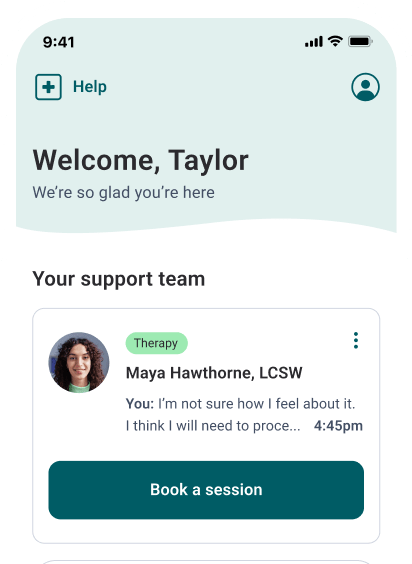
In today’s digital age, accessing professional help has become more convenient than ever. Platforms like Talkspace offer a seamless way to connect with licensed therapists who specialize in OCD. With Talkspace, you can receive an online diagnosis and treatment plan tailored to your needs, all from the comfort of your home. This innovative approach to mental health care not only saves time but also ensures that you receive the support and guidance necessary for managing OCD effectively.
How to Get an OCD Diagnosis with Talkspace
If you’re wondering whether you have obsessive-compulsive disorder (OCD) you don’t have to wait to get professional help. With Talkspace you can quickly and conveniently connect with a licensed provider who will evaluate your symptoms, listen to your concerns, and, if appropriate, diagnose you with OCD or another condition.
Here’s how it works:
- Get started any time by answering a few questions on the Talkspace website or app. You don’t need a referral for either therapy or psychiatric care.
- You’ll be connected with a therapist within about two days or a psychiatric provider within about a week.
- If you choose to start with therapy you can message with your therapist as much as you like and also schedule live sessions. If you choose psychiatry you’ll schedule a live video session with your psychiatric provider.
Often OCD is most effectively treated with a combination of medication and talk therapy. Online therapy helps you manage symptoms and develop coping skills, while online psychiatry addresses the physiological basis or your symptoms, usually with a prescription for medication and ongoing medication management.
Online therapy for OCD
Learn how to manage your OCD symptoms with help from a licensed therapist.
Get startedHow to Treat Obsessive-Compulsive Disorder
An estimated 1.2% of adults living in the United States had OCD within the last year. Although obsessive compulsive disorder can be challenging to deal with, OCD treatments are available and can be highly effective. Some OCD treatments that can help improve your mental health and quality of life include:
- Psychotherapy (also known as talk therapy)
- Prescription medications
- Holistic lifestyle changes
- Deep transcranial magnetic stimulation (TMS)
Psychotherapy for OCD
Several OCD therapy techniques are known to be effective treatment options for obsessive compulsive disorder. They include:
- Psychodynamic therapy
- Cognitive behavioral therapy (CBT)
- Exposure and response prevention therapy (ERP)
Psychodynamic therapy techniques for OCD
Psychodynamic therapy for OCD uses the concepts of transference-focused therapy and psychoanalysis. It aims to help you understand and appreciate the link between past experiences and your current common thoughts and behaviors.
According to researchers, short-term psychodynamic psychotherapy (STPP) is unique. It differs from other forms of OCD treatments because it targets anticipating, recognizing, understanding, communicating, and defeating adverse and unwanted cognitions with the intent of bettering your overall well-being and experiences.
During psychodynamic sessions, troublesome experiences from the past are intentionally brought to light. Then, you’ll be able to assess and address the challenges these experiences are creating in the present.
When you learn to understand the connection between your past experiences and negative reactions, you become empowered to modify those behaviors, so that you can replace them with positive actions.
How cognitive behavioral therapy (CBT) works for OCD
The National Institute for Mental Health (NIMH) recognizes that cognitive behavior therapy (CBT) is a proactive treatment that utilizes several methods to deal with the behavioral and psychological aspects of OCD.
“Cognitive behavioral therapy: CBT helps you replace the automatic responses to anxiety with more healthy choices and behaviors.”
— Reshawna Chapple, Licensed Clinical Social Worker (LCSW), PhD
Cognitive behavioral therapy techniques for OCD
Mindfulness-based CBT is one of the more particularly effective therapies for OCD. Its primary goal is to develop your ability to willingly accept and fully experience undesirable thoughts, urges, and feelings. During online therapy sessions, you’ll agree to face these undesirable sensations in a healthier way. You’ll learn to respond without avoidance behaviors, reassurance seeking, or compulsions.
A CBT therapist works with you to assess the troubling, destructive, unhealthy, obsessive thought patterns that are resulting in undesirable reactions. Together, you’ll work to come up with concrete, actionable steps that’ll decrease symptom severity and frequency.
Psychological assays like the Yale-Brown Obsessive Compulsive Scale (YBOCS) are used to create a thorough list of OCD symptoms. This detailed list can then be used as a helpful guide for another branch of CBT or cognitive therapy called exposure and response prevention therapy (ERP).
How exposure and response prevention works for OCD
Exposure and response prevention (ERP) therapy exposes you to your fears so you can build coping strategies to face and overcome them. Typically, you’ll start with your least-dreaded fears.
Exposure can be gained through suggested thoughts, physical objects, sounds, images, or even virtual reality. During repetitive exposure, you’ll learn how to not engage in the types of compulsive behaviors you normally might.
The length of exposure is gradually increased while you learn to correct unhealthy reactionary behaviors. Of course, ERP can be uncomfortable, especially in the initial stages. However, routine exposure therapy sessions coupled with regular homework result in many people making significant improvements quite quickly.
ERP provides people living with OCD an opportunity to learn new information and practice effective techniques to overcome fears. It can be an empowering way to move forward in life, more mindful of your thoughts, feelings, and urges.
Successful ERP might mean you’re better equipped to not to react negatively, and instead intentionally act in a positive manner. This type of therapy is also known to be effective to treat OCD in children.
Multi-university research concludes that the research we currently have about the efficacy of ERP for OCD treatment is encouraging. More research still needs to be done, but this form of exposure therapy can target specific areas of struggle and work to improve stress tolerance and dysfunctional beliefs and thought patterns.
“Exposure and response therapy (ERP): A form of therapy that helps the client overcome their OCD by gradually exposing them to situations they associate with OCD-inducing anxiety.”
— Reshawna Chapple, Licensed Clinical Social Worker (LCSW), PhD
Medications for OCD
Treatment for OCD often involves prescription medications, particularly selective serotonin re-uptake inhibitors (SSRIs). It’s also not typically used on its own, but rather in combination with therapy.
How does medication treat OCD?
There are dozens of medications to treat OCD. They work by slightly modifying brain chemicals, called neurotransmitters, like serotonin, dopamine, norepinephrine, and glutamate.
While some prescription drugs produce positive effects in some people with OCD and other mental health conditions, it’s not well, or even fully, understood how or why they work. In many cases, you’ll have to experiment with different OCD medications before finding one that works and doesn’t produce intolerable or severe side effects.
Types of medication for OCD
Common medication treatments for OCD can include use of selective serotonin re-uptake inhibitors (SSRIs), or possibly a tricyclic antidepressant (TCA) like clomipramine.
Common SSRIs prescribed for OCD include:
- Luvox (fluvoxamine)
- Prozac (fluoxetine)
- Paxil (paroxetine)
- Zoloft (sertraline)
Note: These are the only prescription drugs to treat OCD that have been approved by the Food and Drug Administration (FDA).
SSRIs aren’t always effective for everyone who takes them. If symptoms don’t improve or worsen, other off-label medications — such as benzodiazepines — might be suggested.
Holistic Treatment for OCD
Whole body, mind, and spirit treatment of OCD can be amazingly effective for improving symptom management.
Holistic self-care most often includes psychoeducation about OCD so you understand the nuances of what’s happening in your brain that’s causing urges and compulsions. During sessions with a skilled therapist, your therapy will teach you coping skills and various self-care techniques that you can practice on your own.
Eventually, it’s you who must live with you every day. Of course, you want to live your best life, and the reality is, your therapist won’t always be there. This is why it’s so imperative to understand your body and brain and stay in touch with yourself.
Benefits of a holistic approach
There are several benefits to taking a holistic approach to treating your OCD.
Treating OCD holistically can:
- Make you physically and psychologically stronger
- Help you better-understand the mental health condition you live with
- Put you in clear control over your thoughts, feelings, and emotions
- Encourage mindfulness at all times, so you have the power to avoid obsessive thoughts and compulsive reactions
Examples of holistic self-care techniques you can begin employing in your life today include:
- Practicing mindfulness meditation to improve emotional control
- Collaborating with a therapist weekly to enhance coping skills
- Recording thoughts and emotions each day in a journal
- Expressing creativity through art, dance, or song
- Cutting out junk food and soda from your diet
- Attending OCD group therapy sessions
- Exercising moderately every day
“If you’re a parent of a child or young adult with OCD, ask their therapist what you can do to help, and what you might be doing that’s interfering in your child’s treatment. Having this education, and being involved in treatment, is the best way to work as a team to fight this.”
— Kate Rosenblatt, Licensed Mental Health Counselor (LMHC), Licensed Professional Counselor (LPC), MA
Deep TMS
According to NIMH, TMS can help improve symptoms of some mental health conditions by either activating or inhibiting certain areas of the brain via controlled electricity. The electricity is either delivered directly into the brain via implanted electrodes, or through surface electrodes that are attached with sticky pads to the scalp.
Researchers have discovered that deep transcranial magnetic stimulation (dTMS) can be used as an effective way to treat both major depression as well as OCD.
“OCD can sometimes be misdiagnosed as ADHD, or depression, or suicidal ideation. Working with a therapist who specializes in OCD is crucial. Know that if you or a loved one is struggling with OCD, there is help out there for you, and you deserve support.”
— Kate Rosenblatt, Licensed Mental Health Counselor (LMHC), Licensed Professional Counselor (LPC), MA
Find Treatment for OCD with Talkspace
If you think or know that you have obsessive-compulsive disorder, it’s important to reach out to a mental health professional for assessment, diagnosis, and treatment. Without treatment and learning about new coping skills, your symptoms of OCD will likely progress and worsen in the future. Reach out to a doctor or a mental health professional who specializes in OCD treatment.
If you’re looking for convenient and flexible therapy, but don’t have hours to spend getting to and from appointments, you might want to consider Talkspace. Learn more about how Talkspace provides online therapy with experienced, accessible, licensed therapists who are ready and willing to help you manage and overcome symptoms of OCD.