

Key Takeaways
- Most adult women need 7-9 hours of sleep per night, though hormones, mental health, and life stage can change how restorative that sleep feels.
- Women experience higher rates of insomnia, anxiety, and depression, which can disrupt sleep and worsen when rest is insufficient.
- Sleep needs shift across the lifespan, from the eight to ten hours recommended for teens to the fragmented sleep common during menopause.
If you've ever found yourself asking how many hours of sleep do women need, the short answer is 7–9 hours. However, reaching that target, and actually feeling rested once you do, is often shaped by forces well beyond setting an alarm. Hormonal fluctuations, anxiety, caregiving demands, and life stage all influence what quality sleep looks like for women.
According to the Office on Women's Health, more than 1 in 4 American women experience insomnia symptoms, a number that reflects how deeply biology and circumstance affect women's rest.
Mental health strongly influences sleep, as stress, anxiety, and mood disorders can disrupt rest, and therapists can support better sleep by providing strategies and treatment to manage these underlying issues.
How Many Hours of Sleep Do Women Need?
Most adult women fall within the 7–9 hour target. According to Sleep Health, a National Sleep Foundation expert panel set that range for adults 18–64, narrowing slightly to 7–8 hours for adults 65 and older. The Centers for Disease Control and Prevention (CDC) recommends 7 or more hours of sleep nightly for healthy adults.
Answering how much sleep women need isn't only about counting hours. Signs of adequate sleep include waking up feeling rested, staying alert without heavy caffeine use, and maintaining a stable mood and concentration throughout the day.
"Overall a good sleeping habit/routine is important for mood stability and concentration. The hours of sleep can vary from woman to woman as different circumstances dictate that targeted sleep be adjusted. So to have a goal of the number of hours of sleep needed is helpful but forcing that goal can be stressful and ultimately counterintuitive to the basic idea that targeted sleep is important."
- Talkspace therapist, Minkyung Chung, MS, LMH
Women vs. men: Sleep duration data
On average, women sleep slightly more than men—but the gap is narrower than most people expect. Data published in the American Sociological Review found that women averaged 8.46 hours of nightly sleep, compared to 8.27 hours for men, a difference of roughly 11 minutes.
This difference reflects sleep patterns, not necessarily biological need. Current research does not show that women universally require more sleep than men. Instead, factors like caregiving responsibilities, work schedules, and sleep interruptions often explain why women’s sleep duration differs. What matters more than this small gap is whether sleep is consistent, restorative, and aligned with individual needs.
Why Do Hormones Affect Women's Sleep Patterns?
Estrogen and progesterone actively modulate sleep architecture and circadian timing, directly affecting sleep. A 2024 analysis in the Sleep Medicine Reviews found that ovarian hormones influence REM and NREM sleep distribution, circadian phase, and metabolic responses to sleep loss.
Women also tend to have an earlier circadian phase, meaning the biological drive to sleep can arrive earlier in the evening. During the premenstrual phase, these disruptions become especially pronounced. PMS and dysmenorrhea are consistently linked to poorer sleep satisfaction, more difficulty initiating and maintaining sleep, and shorter total duration.
According to a study in BMC Women's Health, PMS affects 20–30% of reproductive-age women worldwide, with sleep disturbances, anxiety, and depression among the most common late-luteal symptoms.
Hormonal contraceptives add another variable. Some people may find better sleep efficiency, while others may report more insomnia symptoms, making individual monitoring more informative than any universal rule. If sleep has shifted since starting or changing birth control, tracking a simple sleep diary for a few weeks can reveal patterns worth discussing with a provider.
Women curious about how therapy can support mood stability during hormonally sensitive phases may find online therapy for women a flexible, accessible option.
Life Stages That Change a Woman's Optimal Sleep Time
Sleep needs aren't fixed. From adolescence through menopause, hormonal shifts and life demands continuously reshape both the amount and depth of rest the body requires.
1. Adolescence: Puberty, screens, and the push for 8–10 nightly hours
During adolescence, puberty triggers hormonal changes that affect sleep patterns, often causing later bedtimes. Increased screen time can further delay sleep and reduce quality.
Sleep better
Get support for sleeping issues and insomnia from a licensed therapist, all from the comfort of home.
Get startedExperts recommend 8–10 hours of sleep nightly to support physical growth, brain development, emotional regulation, and overall health, emphasizing the importance of consistent routines and healthy habits.
2. Pregnancy: Shifting needs from the first to the third trimester
Sleep changes significantly across all three trimesters. The first often brings longer sleep and increased daytime drowsiness, while later trimesters typically deliver shorter total sleep time and more nighttime awakenings.
By the third trimester, 60% of pregnant women report poor sleep quality, according to a study in BMC Pregnancy Childbirth. Planned naps and side-sleeping are practical, medically supported ways to compensate for increasingly fragmented nighttime rest.
3. Perimenopause and menopause: Hot flashes, fragmented sleep, and evidence-based relief
According to SWAN, about 30% of premenopausal women report sleep problems, a figure that climbs to roughly 50% during perimenopause. The most common complaint is difficulty staying asleep, driven largely by night sweats and hot flashes that trigger repeated awakenings.
Strategies with real evidence behind them include:
- Cooling bedding and maintaining a lower bedroom temperature to reduce wake-after-sleep-onset from vasomotor symptoms
- Consistent sleep and wake times to stabilize the circadian rhythm
- Cognitive behavioral therapy for insomnia (CBT-I), which may improve sleep quality and reduce insomnia severity in menopausal women across both in-person and remote formats
How Do Mental Health and Lifestyle Factors Impact Women's Rest?
Sleep and mental health go hand in hand, and women often face higher rates of challenges in both areas.
Women are more likely than men to experience anxiety disorders and depression symptoms across their lifespan, according to the National Health Statistics.
The full picture of sleep and mental health reveals why treating one without addressing the other rarely holds. Short sleep duration is an independent predictor of new-onset mental health conditions, particularly anxiety and depression.
Lifestyle factors add another layer of complexity. Women with young children tend to get less sleep overall and are far more likely to have their nights interrupted by caregiving duties than their male counterparts. Working night shifts makes things worse, especially when there's little opportunity to recover between caregiving and work obligations.
These sleep disruptions are more than just the inconvenience of a busy life; they can be warning signs:
- Consistently sleeping five hours or fewer per night is associated with significantly higher rates of depression and more frequent days of poor mental health.
- Long-term insomnia — trouble falling asleep, staying asleep, or waking too early at least three nights a week for three or more months — raises the risk of anxiety, depression, and heart and metabolic conditions.
- Women in midlife who experience severe hot flashes alongside chronic insomnia tend to report much higher rates of mood-related symptoms compared to those without sleep or vasomotor issues.
"Women who struggle with sleep should explore health-related issues along with mental health concerns. While the possible reasons for poor sleep could be one or the other, some level of mental health stressors impact the quality and duration of sleep. Seeking help from a therapist and medical professional ensures that both aspects of poor sleep are being addressed and explored."
- Talkspace therapist, Minkyung Chung, MS, LMH
What Practical Strategies Help Women Achieve Quality Sleep?
Good sleep habits form the foundation, but women benefit most when those habits account for hormonal and lifestyle realities. Recognizing how sleep anxiety feeds sleeplessness is often the first step toward breaking the cycle.
Sleep hygiene fundamentals include:
A 3-step nightly wind-down might go something like this:
- Dim lights and silence notifications 45 minutes before bed
- Practice a brief breathing or body-scan exercise to lower cortisol
- Write tomorrow's to-do list to clear active mental loops
On sleep trackers:
- Consumer wrist-worn devices can help spot broad patterns, but they aren't precise diagnostic tools. These devices sometimes underestimate total sleep time, and their accuracy drops further in fragmented sleep, the condition most common in women with perimenopausal insomnia.
- Use trackers to notice trends, not to render verdicts on sleep quality.
Understanding how many hours of sleep you need on any given night means accepting that the target shifts. Menstrual cycle phase, stress load, and illness all move the baseline. Treating your personal patterns as data is more useful than chasing a fixed number.
Support for Sleep and Mental Health with Talkspace
When sleep problems trace back to anxiety, low mood, hormonal transitions, or relentless stress, better habits alone may not resolve them. That's where mental health care becomes part of the solution.
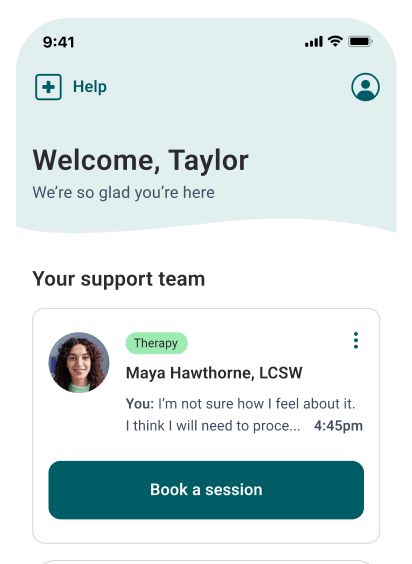
Talkspace connects you with licensed therapists who address the insomnia, anxiety, depression, and stress patterns that keep the brain activated when the body needs rest. Therapy sessions happen via messaging, live video, or audio—accessible from wherever you are, on your schedule.
For women managing caregiving, career pressure, and sleep issues simultaneously, this flexibility is meaningful. Therapy does not replace medical treatment for conditions such as sleep apnea or menopause; rather, it complements and supports overall care.
Addressing the mental and emotional patterns that wire your nervous system for alertness can make every other sleep strategy work better. If poor sleep is affecting your daily life, connecting with a licensed therapist at Talkspace is a strong place to start.
Frequently Asked Questions (FAQs)
Can women catch up on lost sleep with weekend naps?
Weekend naps can reduce daytime fatigue, but they don't replace consistent nightly sleep. Regular seven-to-nine-hour sleep patterns support better mood, cognition, and overall health than irregular recovery sleep.
Does birth control improve or worsen sleep quality?
Hormonal birth control can affect sleep differently depending on the formulation and the individual. Some studies show slight improvements in sleep efficiency for some users, while others report increased insomnia symptoms. Tracking sleep patterns after starting or switching birth control can help identify changes.
Can sleep trackers accurately tell women if they're getting enough quality sleep?
Sleep trackers can reveal general patterns, but they cannot accurately diagnose sleep quality. Consumer devices often underestimate total sleep time and become less reliable when sleep is fragmented. Their data should be viewed as helpful trends rather than definitive measurements.
Sources
- Office on Women's Health. Insomnia and women. U.S. Department of Health and Human Services. https://womenshealth.gov/sites/default/files/documents/fact-sheet-insomnia.pdf. 2024.Accessed March 06, 2026.
- Hirshkowitz M, et al. National Sleep Foundation's sleep time duration recommendations: methodology and results summary. Sleep Health. https://pubmed.ncbi.nlm.nih.gov/29073398/. 2015;1(1):40–43. Accessed March 06, 2026.
- Centers for Disease Control and Prevention. About sleep. CDC. https://www.cdc.gov/sleep/about/index.html. 2024. Accessed March 06, 2026.
- Gender and time for sleep among U.S. adults. Am Sociol Rev. https://pmc.ncbi.nlm.nih.gov/articles/PMC4164903/. 2013;78(1):51–69. Accessed March 06, 2026.
- Lok R, Qian J, Chellappa SL. Sex differences in sleep, circadian rhythms, and metabolism: implications for precision medicine. Sleep Medicine Reviews. https://pubmed.ncbi.nlm.nih.gov/38564856/. 2024;75:101926.Burgard SA, Ailshire JA. Accessed March 06, 2026.
- Jeon B, Baek J. Menstrual disturbances and its association with sleep disturbances: a systematic review. BMC Womens Health. 2023;23(1):470. https://pmc.ncbi.nlm.nih.gov/articles/PMC10474748/. Published 2023 Sep 1. doi:10.1186/s12905-023-02629-0. Accessed March 06, 2026.
- Mislu E, Kumsa H, Tadesse S, et al. Sleep quality disparities in different pregnancy trimesters in low- and middle-income countries: a systematic review and meta-analysis. BMC Pregnancy Childbirth. 2024;24(1):627. https://pmc.ncbi.nlm.nih.gov/articles/PMC11446071/.Published 2024 Oct 1. doi:10.1186/s12884-024-06830-3. Accessed March 06, 2026.
- SWAN Study. Fact sheet: sleep during the menopausal transition. Study of Women's Health Across the Nation. https://www.swanstudy.org/wps/wp-content/uploads/2023/04/SWAN-Fact-Sheets-Sleep.pd. 2023. Accessed March 06, 2026.
- Terlizzi EP, Zablotsky B. Symptoms of Anxiety and Depression Among Adults: United States, 2019 and 2022. 2024 Nov 7. In: National Health Statistics Reports [Internet]. Hyattsville (MD): National Center for Health Statistics (US); 2024 Jul-. Number 213. Available from: https://www.ncbi.nlm.nih.gov/books/NBK609621/ doi: 10.15620/cdc/64018. Accessed March 06, 2026.
Talkspace articles are written by experienced mental health-wellness contributors; they are grounded in scientific research and evidence-based practices. Articles are extensively reviewed by our team of clinical experts (therapists and psychiatrists of various specialties) to ensure content is accurate and on par with current industry standards.
Our goal at Talkspace is to provide the most up-to-date, valuable, and objective information on mental health-related topics in order to help readers make informed decisions. Articles contain trusted third-party sources that are either directly linked to in the text or listed at the bottom to take readers directly to the source.