


Quick Summary
- Deployment changes daily life and emotions, making it normal to feel a mix of sadness, anger, pride, and loneliness. Acknowledge and validate your feelings.
- Establish a communication routine that fits your and your partner’s needs, balancing flexibility with realistic expectations.
- Create a new home routine and lean on your support system to maintain your mental and physical health during deployment.
- Find meaning in temporary independence, prepare for emotional ups and downs, and consider therapy or professional support if stress becomes overwhelming.
When your partner is deployed, your day-to-day life can feel completely different. The routines you once shared, the daily check-ins, even the quiet comfort of sitting in the same room together, can change from one day to the next.
Deployment affects every military relationship differently. It’s common to feel unsettled, like you’re holding everything together at home while you're missing someone who’s far away and facing unknowns of their own. Some days might feel manageable, while even small tasks become difficult on other days. You might find yourself missing your deployed husband or wife so much that you can’t focus or wondering how to survive your partner’s deployment without falling apart.
If this resonates with you, you’re not alone. The emotional weight of deployment is real, and so is the strength it takes to navigate it. Whether this is your first deployment or your fifth, it’s okay to need support.
Acknowledge and Validate Your Emotions
One of the most important things you can do while your spouse is on deployment is to acknowledge what you’re feeling without judgment. You might feel sadness one moment and anger the next, then guilt for feeling either. You might feel proud of your partner while also feeling resentful of the physical and emotional distance caused by their deployment and the strain it puts on your marriage or relationship. You might even cycle through all of these feelings in a single day.
There’s no right way to feel when your partner is deployed. All of these emotions are normal. Naming your emotions is a powerful first step to helping you understand your internal experience and makes it easier to cope with your husband’s deployment.
“We often struggle with identifying the emotions that we are working through because the vocabulary isn’t taught to us. It’s important to recognize and identify the emotions that we are going through to figure out what our next steps should be. All emotions are important and valid. There are no good or bad emotions, just emotions. Learning to recognize and understand that we are allowed to feel all the emotions allows us to be more honest with ourselves and others on how we need help. This is especially important within the military family dynamics as most are expected to be stoic and strong while their loved ones are deployed.”
- Talkspace therapist Minkyung Chung, MS, LMHC
Journaling for mental health can be a powerful tool for tracking emotions and noticing patterns over time. Talking to a trusted friend, family member, or therapist can also help you recognize and process your emotions.
Establish a Communication Rhythm That Works for You Both
Deployment means unpredictable schedules, time zone differences, and limited access to communication with spouses and family. Finding a communication rhythm that works for you and your partner helps make the time more manageable.
Before your husband or wife’s deployment starts, set expectations around how you’ll communicate. It might be:
- Weekly video or phone calls
- Quick check-ins over text
- Writing letters when an internet connection isn’t possible
Some couples prefer frequent check-ins, while others want longer updates spaced out over time. Figure out what works for you before deployment starts. There’s no perfect formula that works for everyone.
Some deployments may involve long stretches of silence and unpredictable access to phones or the internet. When that happens, it can be helpful to remember that lack of contact doesn’t mean lack of care. In these cases, flexibility is key. Try to stay open to different ways of communicating, even if they don’t look as you hoped.
Create Your Own Routine at Home
When your partner is on deployment, it disrupts your sense of normalcy. Creating your own new normal routine can bring structure and comfort while they’re gone.
Focus on activities that nourish you physically and emotionally. For example, you might start taking a morning walk or practicing a favorite hobby. Whether it’s cooking, journaling, or simply making your bed every day, a consistent routine can help you build a sense of control and calm when other parts of your life are uncertain.
If you’re caring for children, adding shared activities and routines can help provide stability for them, too. Don’t forget to pencil in a self-care routine for yourself while your spouse or partner is away. If you're worried about preparing your kids for your spouse's departure, you're not alone. Explore tips on how to talk to your children about deployment to ensure you introduce this new routine with care.
Online therapy for military members
Find out if your insurance covers Talkspace and connect with an experienced, licensed therapist.
Get startedLean Into Your Support System
You don’t have to go through deployment alone. In fact, emotional isolation can intensify stress.Staying connected to your friends, family, other military spouses, and faith communities can make a big difference in how you feel. Even brief conversations or shared moments with others can ease your emotional burden.
If you’re already part of a faith community, military spouse support network, or other support group, lean on those spaces. Talking with others who understand what you’re going through can be a great comfort and bring much-needed perspective.
Take Care of Your Mental and Physical Health
Research has found that prolonged deployments are associated with more mental health diagnoses among Army wives. During your partner’s deployment, you might feel like you have to stay strong for everyone else. If you don’t take proactive measures to take care of your mental and physical health during your spouse’s deployment, depression and anxiety can occur.
“No matter who you are and the circumstances you are in, it is incredibly important to remember that a good balance of self-care and worry is necessary. There is nothing to feel guilty or ashamed about needing self-care or enjoying time off. It’s important to remember that part of building resilience and strength is to know when you need time to recoup.”
- Talkspace therapist Minkyung Chung, MS, LMHC
Prioritizing your own well-being isn’t selfish. It’s an essential part of taking care of your family as a military spouse. Consider the following tips:
- Aim for eating nourishing meals
- Get regular sleep
- Move at least a little every day (even a short walk or stretching at home can make a difference)
- Check in with yourself emotionally, asking, “What do I need today?” or “What’s one small thing that might help me feel more grounded?”
- Talk to a therapist
Mental health support can be a lifeline during this time. Many military families have access to free or low-cost mental health resources. Taking advantage of these benefits for military spouses can help you cope with your partner’s deployment.
“It’s hard to be strong for yourself and others when you don’t take care of yourself. For military families, it’s harder because there are added expectations of how you should behave, which makes it harder to be honest about the need to get help and to take a break. Engaging in therapy allows one to learn how to balance the need to take care of others and oneself.”
- Talkspace therapist Minkyung Chung, MS, LMHC
Find Meaning in Temporary Independence
When you’re apart from your partner, you might feel the loss of shared routines, daily companionship, and emotional closeness. However, this time might also present an opportunity for growth, reflection, and even rediscovery.
Think about what matters to you outside your relationship. Do you have any hobbies, goals, or interests you’ve put on hold? Temporary independence may offer you a chance to reconnect with parts of yourself that you haven't explored due to the everyday grind.
Exploring your passions and setting new goals can help you feel more rooted and confident, so you can better survive your husband or wife’s deployment.
Create Moments of Connection From Afar
When your spouse is on deployment, finding ways to stay emotionally close can help ease the distance. You might not be able to talk every day, but small gestures can help keep your bond strong and ease the pain of missing your husband or wife on deployment.
Try sharing your favorite playlists, reading the same book, or watching the same movie or television show. Putting together a care package can help you feel connected as you choose the items to place in the box. When your partner gets your care package, they’ll be reminded that they are loved and missed.
If you’re missing your deployed spouse, even small moments of connection can help you feel connected to your partner. Remember that love doesn’t stop with distance.
Prepare for the Emotional Waves
Coping with your partner’s deployment can bring emotional highs and lows, often without warning. One day, you might feel steady. Next, you might feel overwhelmed by sadness or anxiety.
Certain days, like anniversaries, birthdays, or stressful news cycles, can hit harder than others. Try to plan ahead for these times and have some coping skills ready in your toolkit. Talking to a trusted friend or therapist, following a calming routine, or doing something grounding, like a walk or journaling, can help.
Above all, be gentle with yourself. You don’t need to handle every day perfectly. Give yourself space to feel your emotions without shame and remember that struggling doesn’t mean you’re not strong.
Look Forward to Reintegration With Realistic Optimism
Thinking about your partner’s return can bring a wave of relief, excitement, and hope. Reunions are deeply meaningful, but they can also be emotionally complex. After spending time apart, it’s normal for both you and your partner to have changed.
Re-adjusting to being together physically might take some time. You may need to re-learn each other's rhythms, rebuild shared routines, and navigate new emotional dynamics. This doesn’t mean there’s something wrong; it’s natural after you’ve reconnected.
Give yourselves room to adjust to life together slowly. Holding space for both the joy and the potential awkwardness of reintegrating your lives is part of surviving your spouse’s deployment.
When To Reach Out for Professional Help
Sometimes, dealing with deployment as a spouse can become too much to manage on your own. If you’re feeling prolonged anxiety and depression, experiencing panic attacks, or having difficulty functioning, it may be time to reach out for professional support.
Therapy can help you process your feelings so you’re better equipped to cope with deployment. You don’t have to wait until it becomes unbearable. Therapy can help you take proactive steps to process your feelings and develop the tools you need to build resilience to survive deployment.
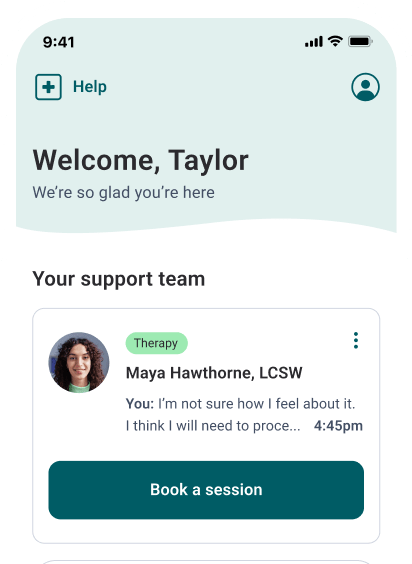
You don’t have to navigate this chapter in your life alone. Talkspace offers online therapy with licensed therapists to fit your life, even during hectic times of deployment and beyond.
Finding Resilience During Deployment
Some days might be harder than others, but this doesn’t mean you’re failing. It means you’re human and you’re doing the best you can in a difficult situation.
Resilience doesn't always look like strength. Sometimes, it looks like resting when you’re tired, reaching out when you feel isolated, or simply making it through the day. Therapy can help you stay connected to your needs and values and move forward.
While your partner is on deployment, your schedule might already feel stretched. That’s why Talkspace offers flexible, online therapy that takes TRICARE, so it fits into your life with ease.
Sources:
- Verdeli H, Baily C, Vousoura E, Belser A, Singla D, Manos G. The case for treating depression in military spouses. J Fam Psychol. 2011;25(4):488-496. doi:10.1037/a0024525 https://pmc.ncbi.nlm.nih.gov/articles/PMC3164322/
- Brandt L, Liu S, Heim C, Heinz A. The effects of social isolation stress and discrimination on mental health. Transl Psychiatry. 2022;12(1):398.doi:10.1038/s41398-022-02178-4 https://pmc.ncbi.nlm.nih.gov/articles/PMC9490697/
- Mansfield AJ, Kaufman JS, Marshall SW, Gaynes BN, Morrissey JP, Engel CC. Deployment and the use of mental health services among U.S. Army wives. N Engl J Med. 2010;362(2):101-109. doi:10.1056/NEJMoa0900177 https://pubmed.ncbi.nlm.nih.gov/20071699/
Talkspace articles are written by experienced mental health-wellness contributors; they are grounded in scientific research and evidence-based practices. Articles are extensively reviewed by our team of clinical experts (therapists and psychiatrists of various specialties) to ensure content is accurate and on par with current industry standards.
Our goal at Talkspace is to provide the most up-to-date, valuable, and objective information on mental health-related topics in order to help readers make informed decisions.
Articles contain trusted third-party sources that are either directly linked to in the text or listed at the bottom to take readers directly to the source.