



Quick Summary
- Retired military spouses may keep key benefits, including TRICARE health coverage, commissary/exchange access, and financial protections like the Survivor Benefit Plan (SBP) and Dependency and Indemnity Compensation (DIC).
- Education and career support programs, such as the Military Spouse Employment Partnership and state-specific tuition waivers, help spouses pursue new goals after service life.
- Eligible spouses may receive relocation assistance for a final move and can access support networks like Military OneSource, Blue Star Families, and advocacy groups.
- Mental health services remain covered under TRICARE, offering in-person and telehealth counseling to help navigate the emotional transition after military retirement.
Life as a military spouse has its unique challenges and sacrifices. You’ve dedicated your whole life to your partner’s service. Over the years, you’ve probably faced frequent moves, uncertainty, and being separated from family and friends. Now that your spouse is retiring, you have many opportunities, but also lots of questions. One of the biggest things you might be wondering about is what support and benefits for retired military spouses exist. This next chapter can feel full of possibilities, but navigating life after service can also cause uncertainty and anxiety. We’ve got you covered.
This guide walks you through retired military spouses’ benefits and shows you how to access them with confidence.
Overview of Retirement Benefits for Military Families
A spouse’s retirement is an exciting time. It’s also a time that comes with all new entitlements and status, which might be overwhelming in the beginning. The good news is that as a retired military spouse, you’re still eligible for a wide range of military spouse benefits. You have options for continued healthcare coverage, financial benefits, and beyond.
To make your transition smoother, make sure your eligibility is current. You can confirm this by checking that you’re correctly listed as your spouse’s dependent in the Defense Enrollment Eligibility Reporting System (DEERS).
Your benefits will depend on your spouse’s service history. Everyone’s situation is a little bit different, so you’ll likely have to do some research to get a sense of what’s available. If you were married for 20 years and your spouse served for at least 20 years, you’re likely entitled to the full suite of benefits, from healthcare to commissary and exchange access, and more.
Navigating the system can feel overwhelming, but it pays off when you have access to all the rewards you’re entitled to.
Healthcare Benefits for Retired Military Spouses
When your spouse becomes a retired veteran, you’re still eligible for health insurance through TRICARE. In most cases, you have 90 days from the date of retirement to enroll in a TRICARE health plan. Your new comprehensive program still covers most of your healthcare needs, from doctor’s visits to prescription medications to hospitalization to mental health services and more.
Once you or your spouse becomes eligible for Medicare, you’ll be eligible for TRICARE For Life, which is automatic and supplements Medicare Part A and Part B. You’ll still pay Medicare Part B premiums, though.
Keep in mind that TRICARE for military retirees and spouses of those veterans includes mental health coverage. Retirement can stir up emotions and feelings of loss due to shifting family dynamics and other new changes. You might suddenly have questions about your identity after military life. Fortunately, TRICARE covers individual, group, and family therapy, both in person and via telehealth options. If you’ve noticed that your emotional state is shifting throughout the retirement process, you’re not alone, and support is available when you need it.
“One of the challenges that retired military spouses often face after their partner transitions out of service is that the amount of time they have together increases. This adjustment period can bring up communication issues, unaligned goals, and mood swings that are exposed during retirement. It can also release the stress accumulated from carrying the family responsibilities alone.”
- Talkspace therapist Dr. Karmen Smith LCSW DD
Online therapy for military members
Find out if your insurance covers Talkspace and connect with an experienced, licensed therapist.
Get startedFinancial Benefits and Survivor Benefits
Retirement often brings up fears and concerns about financial security. The Survivor Benefit Plan (SBP) ensures you have access to a monthly annuity if your spouse passes away after retirement. This benefit is designed to help you maintain your standard of living, even once your spouse is gone.
You may also qualify for Dependency and Indemnity Compensation (DIC) benefits. This tax-free monthly benefit is offered to surviving spouses of veterans whose death is related to service or who have met some disability conditions. As of 2025, the estimated monthly DIC payment is $1653.07 and up, depending on dependent children and other criteria. You might be able to continue receiving benefits even if you remarry.
Some additional potential sources of retired military spouse benefits include:
- Pension: If your spouse opted in, you may have access to a portion of their pension.
- Social Security: Available to eligible retired military spouses.
- VA benefits: Provides various health and disability benefits for families of retired service members.
Education and Career Support
Your spouse’s retirement doesn’t mean you have to pause your career growth. You still have access to several education and career benefits that are designed specifically for spouses of service members.
- National Military Family Association Spouse Scholarship: Helps pay for degrees, certifications, licensure, clinical supervision for mental health licensure, CEUs, business expenses, and more.
- Department of Veterans Affairs’ Survivors’ and Dependents’ Education Assistance program: Eligible if your spouse has a service-connected disability.
- State-specific education benefits and waivers: Check state benefits for spouses of veterans, disabled veterans, or those killed in action. If you’ve put your own goals on hold for years, this can be an opportunity to invest in yourself.
- Military Spouse Employment Partnership (MSEP): Employment assistance program offering support specifically for military spouses.
Housing and Relocation Assistance
Life after the military might still mean moves, especially when your spouse first retires. You might relocate closer to family or start your new chapter in a dream location. You’ll no longer receive the active-duty housing allowance, but some transition-related benefits may still be available to you.
If eligible, you might qualify for relocation benefits to cover the cost of one final move from your last duty station after retirement.
Support Networks and Resources
Military networks and resources can offer critical support as you get used to life after retirement. Many of these exist specifically to uplift and advocate for you, with services like peer mentorship, leadership programs, and resource toolkits.
- Military OneSource: Provides confidential 24/7 support, counseling, and guidance for things like employment, mental health, and even financial planning.
- Military Spouse Advocacy Network: Offers support and advocacy through peer-to-peer mentorship and virtual resources. Leadership development programs can help you thrive at all stages of your life.
- Blue Star Families & local groups: Find opportunities for networking and sharing experiences. Build a supportive community that supports you throughout this major milestone so you never feel alone.
Mental health and counseling resources are available through many support organizations. Use them to connect with a professional who understands your experience and can offer guidance.
Get Online Mental Health Support Covered by TRICARE
Retirement comes with new routines and questions. Of all the transitions that come with a military spouse separating from service, mental health support can be more critical than ever.
Research shows that spouses of military retirees are at risk of suffering due to the loss of social support that’s so prevalent in military life. The transition can cause stress, anxiety, and other emotional impacts in relationships.
TRICARE continues to provide military mental health benefits for retired military spouses, so you have access to counseling, therapy sessions, and telehealth options.
Covered mental health therapeutic services include:
- Psychotherapy
- Psychoanalysis
- Psychological testing and assessment
- Electroconvulsive treatment
- Medication
- Ancillary therapies like art, music, and dance therapy
“Therapy can benefit retired military spouses adjusting to this new chapter of life by acknowledging that there is a transition period and adjusting can take time. Affirming that what comes up for you is valid and worthy of attention. Counseling can be very helpful with adjusting to different circumstances and life stages.”
- Talkspace therapist Dr. Karmen Smith LCSW DD
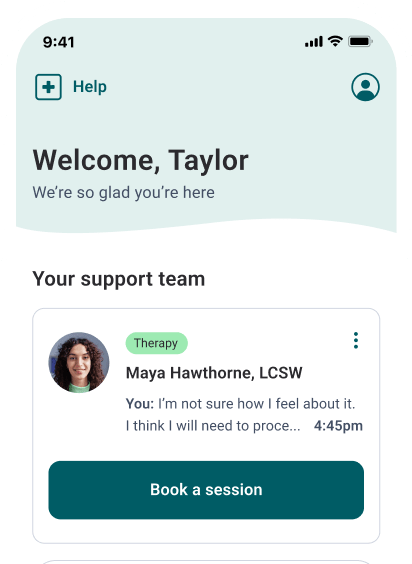
Talkspace offers convenient, confidential online therapy for retired military spouses that’s covered by TRICARE. Take advantage of the mental health resources available to ensure your well-being and continue nurturing your military relationship post-retirement. Discover additional resources tailored to life after the military, from advice for spouses on how to live with a veteran with PTSD to guides for those suffering from military PTSD themselves.
Learn more about online therapy that takes TRICARE by reaching out to Talkspace today.
Sources:
- Retiring. TRICARE. https://tricare.mil/LifeEvents/Retiring. Accessed July 29, 2025.
- TRICARE For Life. TRICARE. https://tricare.mil/Plans/HealthPlans/TFL. Accessed July 29, 2025.
- Medicare Part B Premiums for TRICARE For Life. TRICARE. https://tricare.mil/Plans/HealthPlans/~/link.aspx?_id=A1B4D2E1075340AEB751B7107CEE3ED4&_z=z. Accessed July 29, 2025.
- Military Compensation and Financial Readiness. Survivor Benefit Program Overview. Military Compensation and Financial Readiness. https://militarypay.defense.gov/Benefits/Survivor-Benefit-Program/Overview/. Accessed July 29, 2025.
- Military OneSource. Dependency & Indemnity Compensation | Military OneSource. Military OneSource. Published September 20, 2024. https://www.militaryonesource.mil/benefits/dependency-and-indemnity-compensation/. Accessed July 29, 2025.
- National Military Family Association. Military Spouse Scholarship FAQs - National Military Family Association. National Military Family Association. Published October 1, 2024. https://www.militaryfamily.org/state-of-the-military-family-programs/spouses-scholarships/military-spouse-scholarship-faqs/. Accessed July 29, 2025.
- Miller A. Survivors’ and Dependents’ Educational Assistance (DEA). Military.com. Published October 8, 2024. https://www.military.com/education/money-for-school/dependents-educational-assistance-dea.html. Accessed July 29, 2025.
- Military spouse employment partnership. https://msepjobs.militaryonesource.mil/msep/about-us. Accessed July 29, 2025.
- Military OneSource. Support for military personnel & families | Military OneSource. Military OneSource. Published July 28, 2025. https://www.militaryonesource.mil/. Accessed July 29, 2025.
- Military Spouse Advocacy Network. Military Spouse Advocacy Network. https://www.militaryspouseadvocacynetwork.org/. Accessed July 29, 2025.
- Welcome to Blue Star Families. Blue Star Families. https://bluestarfam.org/. Accessed July 29, 2025.
- Flohr RK. Back on the Block: Spousal Transitional Difficulties in Military Retirement. PsyD Program in Clinical Psychology Doctoral Dissertations (New England). Published online 2016. https://aura.antioch.edu/psydcpne/2/?utm_source=aura.antioch.edu%2Fpsydcpne%2F2&utm_medium=PDF&utm_campaign=PDFCoverPages. Accessed July 29, 2025.
- Mental Health Therapeutic Services. TRICARE. https://tricare.mil/CoveredServices/IsItCovered/MentalHealthTherapeuticServices. Accessed July 29, 2025.
Talkspace articles are written by experienced mental health-wellness contributors; they are grounded in scientific research and evidence-based practices. Articles are extensively reviewed by our team of clinical experts (therapists and psychiatrists of various specialties) to ensure content is accurate and on par with current industry standards.
Our goal at Talkspace is to provide the most up-to-date, valuable, and objective information on mental health-related topics in order to help readers make informed decisions.
Articles contain trusted third-party sources that are either directly linked to in the text or listed at the bottom to take readers directly to the source.