


Key Takeaways
- Non-binary describes people whose gender identity isn’t strictly male or female, and can include fluid or shifting genders.
- Common signs include feeling out of place with traditional gender roles, preferring different pronouns or names, and experiencing gender euphoria or questioning societal norms.
- Exploring identity often involves reflection, experimenting safely with expression, and seeking support from friends, peers, or LGBTQIA+ professionals.
Exploring gender can feel confusing, especially if you don’t see yourself reflected in the categories society expects. You might have come across terms like non-binary and wondered what they actually mean. At its core, understanding the meaning of non-binary isn’t just about definitions; it’s about how you experience yourself.
Non-binary is an umbrella term for people who don’t identify exclusively as male or female. If you’re asking yourself, am I non-binary, you’re not alone. Many people reach a point where traditional labels don’t fully fit, and that uncertainty can be both unsettling and clarifying at the same time. Gender is deeply personal. It doesn’t always follow a clear path, and it doesn’t need to be figured out all at once.
Non-Binary Meaning
At its simplest, the term "non-binary" refers to a gender identity that isn’t exclusively male or female. It emerged as language evolved to better reflect the reality that gender exists on a spectrum, not just within a strict binary. Today, “non-binary” acts as an umbrella that includes a range of identities, each describing different ways people experience and relate to gender.
Within this umbrella, there are several gender identities people may relate to. These aren’t rigid categories, but examples that show how varied non-binary experiences can be:
Some people use one of these labels, while others simply identify as non-binary without adding anything further. There’s no single way to experience or express it, and that flexibility is part of what defines the term.
Sex vs. gender: what’s the difference?
When exploring non-binary identity, it helps to understand the distinction between sex and gender. These terms are often used interchangeably, but they refer to different aspects of a person’s identity.
Understanding this difference can make it easier to see why non-binary identities exist. While sex is assigned, gender is experienced, and for many people, that experience doesn’t fit within a binary framework.
What non-binary is not
There’s also a lot of confusion around what being non-binary means in practice. A few common misconceptions can make it harder to understand your own experience clearly:
- It’s not the same as androgyny: How you look, or dress, doesn’t define your gender identity.
- It doesn’t require dysphoria: Not all non-binary people feel distress about their body or identity.
- It’s not a trend: Increased visibility reflects growing awareness, not a new phenomenon.
Research published by the National Library of Medicine shows that gender-diverse individuals report better mental health outcomes when their identity is affirmed, reinforcing that non-binary experiences are both real and meaningful.
What Feelings and Questions Come Up When You Question Your Gender?
Exploring your gender often brings a mix of uncertainty and clarity. If you’re asking how to know if I am non-binary or am I non-binary, it’s common for answers to develop gradually rather than all at once. Many people move through a period of questioning gender identity, especially when they don’t yet have the language or support to describe what they’re feeling.
A useful way to understand these experiences is to notice both discomfort and moments of alignment:
Both can exist together; experiencing one doesn’t cancel out the other. It also helps to keep a few grounding ideas in mind while you’re exploring:
- You don’t need a fixed label to start understanding yourself. This process can begin with curiosity, not certainty.
- Your experience doesn’t have to match anyone else’s to be valid. There’s no single way to be non-binary.
- Uncertainty is part of exploration, not a sign that something is wrong. Not having answers yet is expected.
Explore online therapy
Get support from an affirming therapist with experience in the LBTQIA+ community.
Find a therapistCommon feelings and questions non-binary people might have while exploring gender
As you reflect, certain thoughts or patterns may come up repeatedly. These aren’t checkboxes; they’re simply common experiences people notice:
- I’ve never felt fully comfortable being seen as a boy or a girl. Does this mean something?
- It feels uncomfortable when people use gendered language directed at me
- Even if others see me one way, I feel different internally
- I feel outside typical gender norms, even if I can’t explain how
- I feel pressure to act a certain way; could that be related to gender?
- I wish people could see me the way I see myself
- Being misgendered makes me feel invisible or disconnected
- I don’t always know how to explain my gender to others
There’s no set timeline for understanding your gender. A study published by PubMed Central shows this process can take time, especially without access to support or resources. What matters is giving yourself space to notice what feels true, at your own pace.
As you explore your own identity, you may also find yourself thinking about the people around you and how they can show up for you better. Sharing resources on ways to support a transgender or non-binary loved one with friends and family can help build a more understanding environment, making your journey feel less isolating. The people in your life do not need to have all the answers; they simply need to be willing to listen and learn alongside you.
How Can You Explore Your Gender Identity Safely?
Exploring your gender works best when you feel safe — emotionally, socially, and physically. If you’re trying to understand the meaning of non-binary for yourself, small, low-pressure experiments can help you notice what feels right without forcing a label. Focus on observing your reactions rather than reaching conclusions. Some people explore privately, while others involve trusted people. Professional support isn’t required, but it can help you process what you’re noticing at your own pace.
Reflect on your experiences
Looking at your past and present experiences can reveal patterns in how you relate to gender. This includes childhood memories, expectations placed on you, and how you’ve felt in your body or social roles. Pay attention to both discomfort (dysphoria) and moments that feel affirming (euphoria); both are useful signals.
To make this more concrete, you can journal around prompts like:
- When have I felt most like myself in terms of gender?
- Are there situations where I feel pressured to act in a certain way?
- How do I feel about my body, or how others perceive me?
These reflections don’t need to lead to answers; they help you notice what stands out over time.
Try out a new language or pronouns
Experimenting with language can be one of the most immediate ways to explore identity. You can start in low-stakes environments, using different pronouns in a game profile, a private journal, or with a trusted friend. Notice whether something feels neutral, uncomfortable, or unexpectedly right.
If you want to involve someone you trust, a simple way to ask could be:
- “Hey, I’m trying out different pronouns. Would you be open to using [they/them] for me and letting me know how it feels?”
Seek affirming communities
Connecting with others can make the process feel less isolating. Online forums, local LGBTQIA+ groups, or community events can expose you to different ways people understand and express gender. It’s important to choose spaces that feel safe and respectful.
Look for communities with clear moderation, inclusive language, and a focus on support rather than judgment. Sharing small steps, like trying a new name or expressing a feeling, can help build confidence over time. You don’t have to share everything at once; even small moments of recognition can be meaningful.
Is It Normal for Gender to Feel Fluid and Uncertain?
Research published by PubMed Central shows that gender fluidity is a natural part of identity development, especially among people who don’t fit within traditional binaries. It’s common for your sense of self to shift over time, and that change doesn’t make your experience any less valid.
Some studies suggest that a meaningful proportion of young people report changes in how they understand or describe their gender as they explore it. If that uncertainty feels overwhelming, grounding practices can help you stay connected to what feels real in the moment. You might try:
- Noting when you feel most comfortable or “like yourself” during the day
- Writing down moments of discomfort or alignment without trying to interpret them immediately
- Focusing on small, present choices (how you dress, speak, or express yourself) rather than long-term labels
You don’t need to have everything figured out to move forward. Sometimes, allowing space for change is what makes clarity possible, and having the right support can make that process feel less isolating.
Why Consider Talkspace for Gender-Affirming Support?
Exploring your gender identity is a deeply personal process, and having the right support makes a real difference. Working with a gender-affirming therapist gives you a judgment-free space to process your thoughts at your own pace, without pressure or urgency.
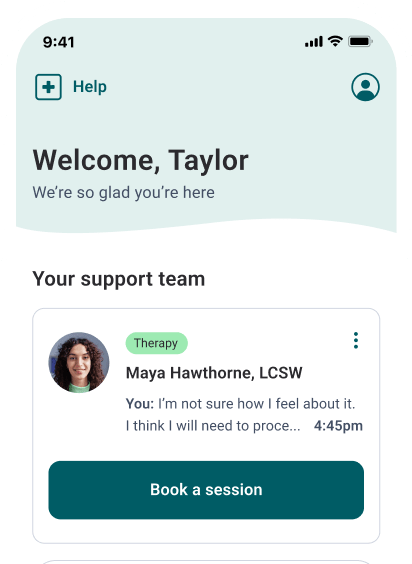
Online counseling for the LGBTQIA+ community through Talkspace connects you with licensed therapists who understand gender diversity and are equipped to support identity exploration thoughtfully and respectfully. Sessions are flexible, private, and available whenever you need them. If you are ready to feel more grounded in your journey, connect with a licensed therapist at Talkspace today.
Frequently Asked Questions
What’s the difference between non-binary and transgender?
Non-binary is a gender identity that isn’t exclusively male or female. Transgender is a broader term for anyone whose gender differs from the sex assigned at birth. Some non-binary people identify as transgender, while others don’t.
Which pronouns should I use for a non-binary person?
The most accurate pronouns are the ones a person tells you they use. Many non-binary people use they/them, but others may use he/him, she/her, or neopronouns. When unsure, it’s best to ask respectfully.
Do all non-binary people experience dysphoria?
No, not all non-binary people experience gender dysphoria. Some feel discomfort, while others mainly experience gender euphoria or neutrality. Identity is valid regardless of distress.
Can non-binary identities change over time?
Yes, gender identity can evolve. Some people experience fluidity in how they understand or express their gender over time. Change doesn’t make the identity less real—it reflects personal growth and exploration.
How do I legally change my gender marker if I’m non-binary?
To legally change your gender marker as a non-binary person, you typically need to file a petition with your local or state vital records office or court, providing any required forms and identification. Requirements vary by jurisdiction, so check local laws for acceptable documentation, fees, and procedures for updating your birth certificate, driver’s license, and other legal records.
Sources
- Galupo MP, Pulice-Farrow L, Pehl E. “There is nothing to do about it”: Nonbinary individuals’ experience of gender dysphoria. Transgender Health. 2020;6(2):101-110. doi:10.1089/trgh.2020.0041. https://pmc.ncbi.nlm.nih.gov/articles/PMC8363999/. Accessed April 26, 2026.
- Fiani CN, Han HJ. Navigating identity: Experiences of binary and non-binary transgender and gender non-conforming (TGNC) adults. International Journal of Transgenderism. 2018;20(2-3):181-194. doi:10.1080/15532739.2018.1426074. https://pmc.ncbi.nlm.nih.gov/articles/PMC6830994/. Accessed April 26, 2026.
- Katz-Wise SL, Ranker LR, Kraus AD, et al. Fluidity in Gender Identity and Sexual Orientation Identity in Transgender and Nonbinary Youth. J Sex Res. 2024;61(9):1367-1376. doi:10.1080/00224499.2023.2244926. https://pubmed.ncbi.nlm.nih.gov/37585555/. Accessed April 26, 2026.
Talkspace articles are written by experienced mental health-wellness contributors; they are grounded in scientific research and evidence-based practices. Articles are extensively reviewed by our team of clinical experts (therapists and psychiatrists of various specialties) to ensure content is accurate and on par with current industry standards.
Our goal at Talkspace is to provide the most up-to-date, valuable, and objective information on mental health-related topics in order to help readers make informed decisions. Articles contain trusted third-party sources that are either directly linked to in the text or listed at the bottom to take readers directly to the source.