Table of Contents:
Our Editorial Standards

Reviewed for Accuracy

Up-to-date Research

Credible References
Depression
Read Time: 6 Minutes

Updated On: September 16, 2025


Overview
- To get depression medication, consult a licensed healthcare provider—your primary care physician, psychiatrist, or psychiatric nurse practitioner—who can evaluate symptoms, discuss treatment options, and provide a prescription.
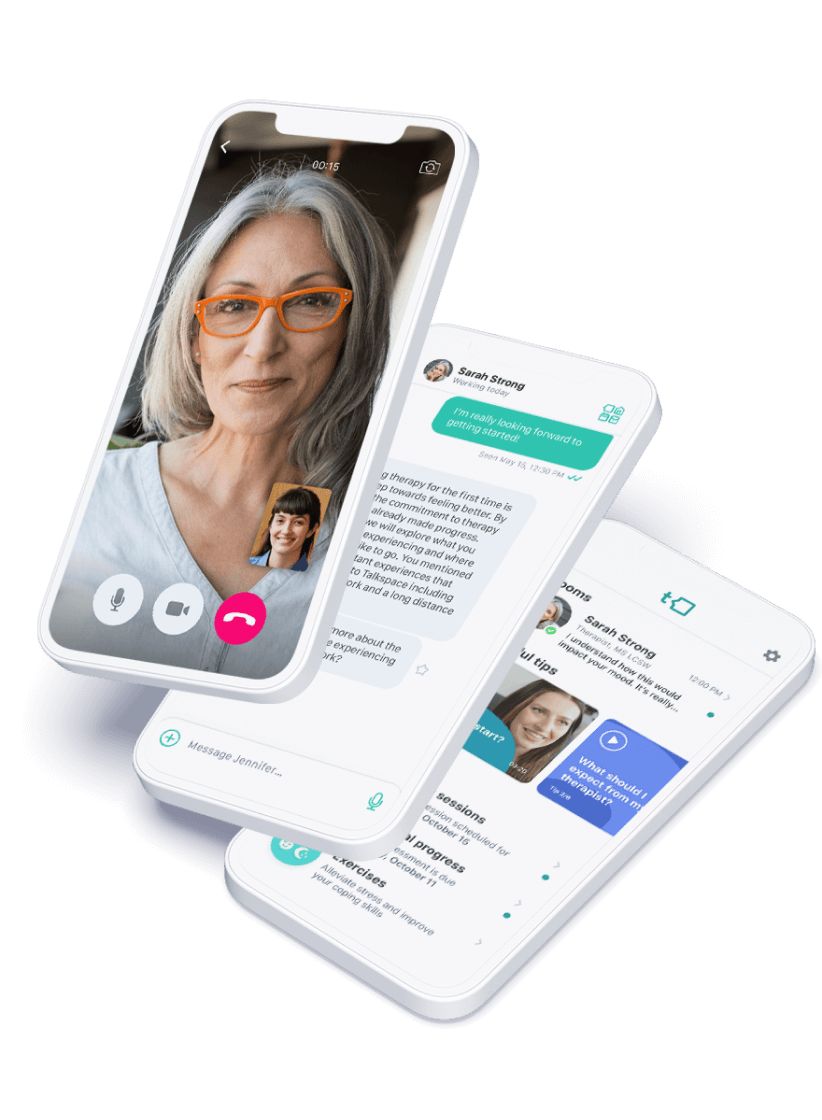
- Online psychiatry and therapy platforms, such as Talkspace, allow patients to connect with qualified psychiatric providers remotely, receive a psychiatric evaluation, and get a treatment plan that may include depression medication, therapy, or both.
It can be hard to cope with any type of depression. Thankfully, when it comes to how to treat depression, there are clinically proven medications that can provide symptom relief. If you want to learn more about how to get prescribed antidepressants, your first step is going to be talking to your doctor or a qualified mental healthcare professional through in-person or online psychiatry. A psychiatric evaluation can help your provider determine if prescription medication is right for your particular mental health condition.
Read on to learn more about how to get depression medication — we’re covering everything you need to know, here.
How Easy Is It to Get Antidepressants?
Depression can leave you feeling sad, empty, and hopeless. Many people find it difficult to concentrate or keep track of basic tasks. While antidepressant medication can significantly improve symptoms, these medications require a prescription.
Trying to figure out how to get antidepressant prescription medication? You’ll be happy to learn the process isn’t overly complicated. Antidepressants are the first-line treatment for depression, and care providers frequently prescribe medication to people struggling with depressive symptoms.
That said, you won’t have access to medication if you don’t reach out for help. If you’re considering treatment through antidepressant medication or think you are showing signs you need antidepressants, you’ll need to talk to your doctor or a mental healthcare provider.
Who Can Prescribe Antidepressants?
To obtain antidepressants, you can work with your primary care physician. If they’re not comfortable prescribing certain antidepressants, they’ll refer you to a mental health specialist, such as a psychiatrist or psychiatric nurse practitioner. These professionals can prescribe antidepressants and also offer additional mental health support, including therapy and coping strategies.
The most commonly used type of antidepressant medicine is a class of drugs known as selective serotonin reuptake inhibitors (SSRIs). SSRIs aren’t controlled substances, and many healthcare providers are licensed to prescribe this type of medication.
“Psychiatrists, primary care physicians, and nurse practitioners can prescribe antidepressants and other psychiatric medication.”
Expert Insight
Psychiatrist, MD, DFAPA Muhammad Munir
How to Get Antidepressants
Can you get antidepressants over the counter?
No. Antidepressants are prescription-only medications in the United States. They must be prescribed by a licensed healthcare provider because the correct type, dosage, and monitoring are important for safety and effectiveness. Over-the-counter options do exist for mild mood support, such as certain supplements like St. John’s Wort, but these are not a replacement for clinically prescribed antidepressants.
Why won’t my doctor put me on antidepressants?
There are several reasons a doctor might hesitate to prescribe antidepressants. They may want to rule out other medical conditions that can mimic depression, try therapy or lifestyle changes first, or ensure the diagnosis is accurate. Doctors also consider potential side effects, interactions with other medications, and your overall health before prescribing. If your doctor isn’t prescribing medication right away, it’s often because they’re trying to provide the safest, most effective treatment plan for you.
How do I ask my doctor for depression medication?
Start by being open and honest about your symptoms. You can say something like, “I’ve been feeling consistently sad, anxious, or fatigued for several weeks, and it’s affecting my daily life. Could antidepressants help me?”
Explain how your mood impacts your work, relationships, or daily functioning. Asking questions about potential benefits, side effects, and alternative treatments shows you’re informed and invested in your care. Your doctor or psychiatrist can then guide you toward the best treatment plan, which may include depression medication, therapy, or a combination of approaches.
Finding a Holistic Treatment Plan with Depression Medication
At the moment, you might be just thinking about how to get antidepressants, but as we’ve discussed, it’s common for a depression treatment plan to be a combination of medication, therapy, lifestyle changes, and other recommendations. To effectively manage symptoms of depression, these kinds of treatments are all worth considering.
“There’s no magic pill to fix everything. Using both medication and therapy will have the role for best outcomes. Meds help the physiological symptoms, while therapy takes care of psychological issues and conflicts.”
Psychiatrist, MD, DFAPA Muhammad Munir
Online therapy for depression
You don't have to deal with depression alone. Get an appointment from home within a few days.
Studies show that people with severe or mild depression see substantially better outcomes when they combine medication with talk therapy. Yes, antidepressants can improve mood and ease many of your symptoms. Therapy for depression can take your healing a step further. It can help you identify triggers, relationships, and situations that may be contributing to your depression. With the right treatment plan, you’ll be able to develop new coping mechanisms and retake control of your life.
Many factors can contribute to worsening depressive symptoms. For example, lack of sleep, chronic stress, poor diet, and abusive environments are all risk factors. A mental health care provider can create a treatment plan to address all these issues. With a detailed treatment plan, you’ll be able to make more progress and see more dramatic results.
Find Depression Medication with Talkspace Psychiatry
Depression symptoms can be tough to cope with. Severe depression can negatively impact every aspect of your life, from your performance at work to your relationships with others. If you’re ready to get started and want to learn how to get depression medication, Talkspace is the effective, promising resource you’ve been seeking. You’ll have access to personalized care from board-certified psychiatrists and psychiatric nurse practitioners. With Talkspace, the psychiatric care you need for your depression is available when you are.
Best of all, Talkspace makes it simple to connect with a licensed psychiatric clinician. After a brief assessment, you’ll be matched with an online psychiatry prescriber and can schedule your first session to discuss your symptoms and get a treatment plan that may include a prescription for depression medication.
If you’re depressed, don’t hesitate to ask for help. Talkspace offers convenient, affordable, accessible treatment for depression so you can take back control of your life. Learn how to manage depression with Talkspace, and get started today.
FAQs About Getting Depression Medication
Can you get antidepressants over the counter?
No. Antidepressants are prescription-only medications in the United States. They must be prescribed by a licensed healthcare provider because the correct type, dosage, and monitoring are important for safety and effectiveness. Over-the-counter options do exist for mild mood support, such as certain supplements like St. John’s Wort, but these are not a replacement for clinically prescribed antidepressants.
Why won’t my doctor put me on antidepressants?
There are several reasons a doctor might hesitate to prescribe antidepressants. They may want to rule out other medical conditions that can mimic depression, try therapy or lifestyle changes first, or ensure the diagnosis is accurate. Doctors also consider potential side effects, interactions with other medications, and your overall health before prescribing. If your doctor isn’t prescribing medication right away, it’s often because they’re trying to provide the safest, most effective treatment plan for you.
How do I ask my doctor for depression medication?
Start by being open and honest about your symptoms. You can say something like, “I’ve been feeling consistently sad, anxious, or fatigued for several weeks, and it’s affecting my daily life. Could antidepressants help me?”
Explain how your mood impacts your work, relationships, or daily functioning. Asking questions about potential benefits, side effects, and alternative treatments shows you’re informed and invested in your care. Your doctor or psychiatrist can then guide you toward the best treatment plan, which may include depression medication, therapy, or a combination of approaches.
See References
-
Comparative efficacy and acceptability of 21 antidepressant drugs for the acute treatment of adults with major depressive disorder: A systematic review and network meta-analysis.
Cipriani A, Furukawa TA, Salanti G, et al. The Lancet. 2018;391(10128):1357-1366. doi:10.1016/s0140-6736(17)32802-7.
-
Optimising first- and second-line treatment strategies for untreated major depressive disorder — the sun☺D study: A Pragmatic, multi-centre, assessor-blinded randomised controlled trial.
Kato T, Furukawa TA, Mantani A, et al. BMC Medicine. 2018;16(1). doi:10.1186/s12916-018-1096-5.
-
Combining psychotherapy and antidepressants in the treatment of depression.
de Jonghe F, Kool S, van Aalst G, Dekker J, Peen J. Journal of Affective Disorders. 2001;64(2-3):217-229. doi:10.1016/s0165-0327(00)00259-7.
Dr. Muhammad Munir, MD, DFAPA, has over 20 years of clinical experience specializing in mood disorders, anxiety disorders, bipolar disorder, PTSD, panic disorder, and ADHD. Dr. Munir believes in “back to basics” the therapeutic alliance between the physician and patients. The hallmark of this alliance is the emphatic process whereby the patient is not only enabled, but educated and encouraged, to take an active role in their psychiatric care and wellbeing.



Related Articles About Depression
View all articles
Understanding Depression in Veterans
Medications for Seasonal Affective Disorder
How To Help Someone With Seasonal Depression
How Long Does Therapy Take to Work for Depression?
How to Tell the Difference Between Depression and Laziness
How To Be a Good Mom When You’re Depressed
Navigating Depression After Retirement
What to Do When Your Parent is Struggling with Depression
Depression in Nurses: A Mental Health Crisis in Healthcare
Fatherhood Depression: Breaking the Silence on Depressed Dads
Effective and affordable mental health treatment
Get Started